OGAsTV Editorial Solution Piece:
The debate over the removal of fuel subsidy continues to divide opinion in Nigeria. Speaking recently, politician Peter Ameh argued that removing the subsidy without adequate planning contributed to a sharp increase in transportation costs, which he said has had ripple effects on food prices, business costs and the overall cost of living.
Whether one agrees with his figures or not, one reality is difficult to ignore: transportation has become one of the biggest financial burdens on millions of Nigerians.
This raises an important question.
If local governments cannot control the price of petrol, can they at least help reduce the cost of transportation within their communities?
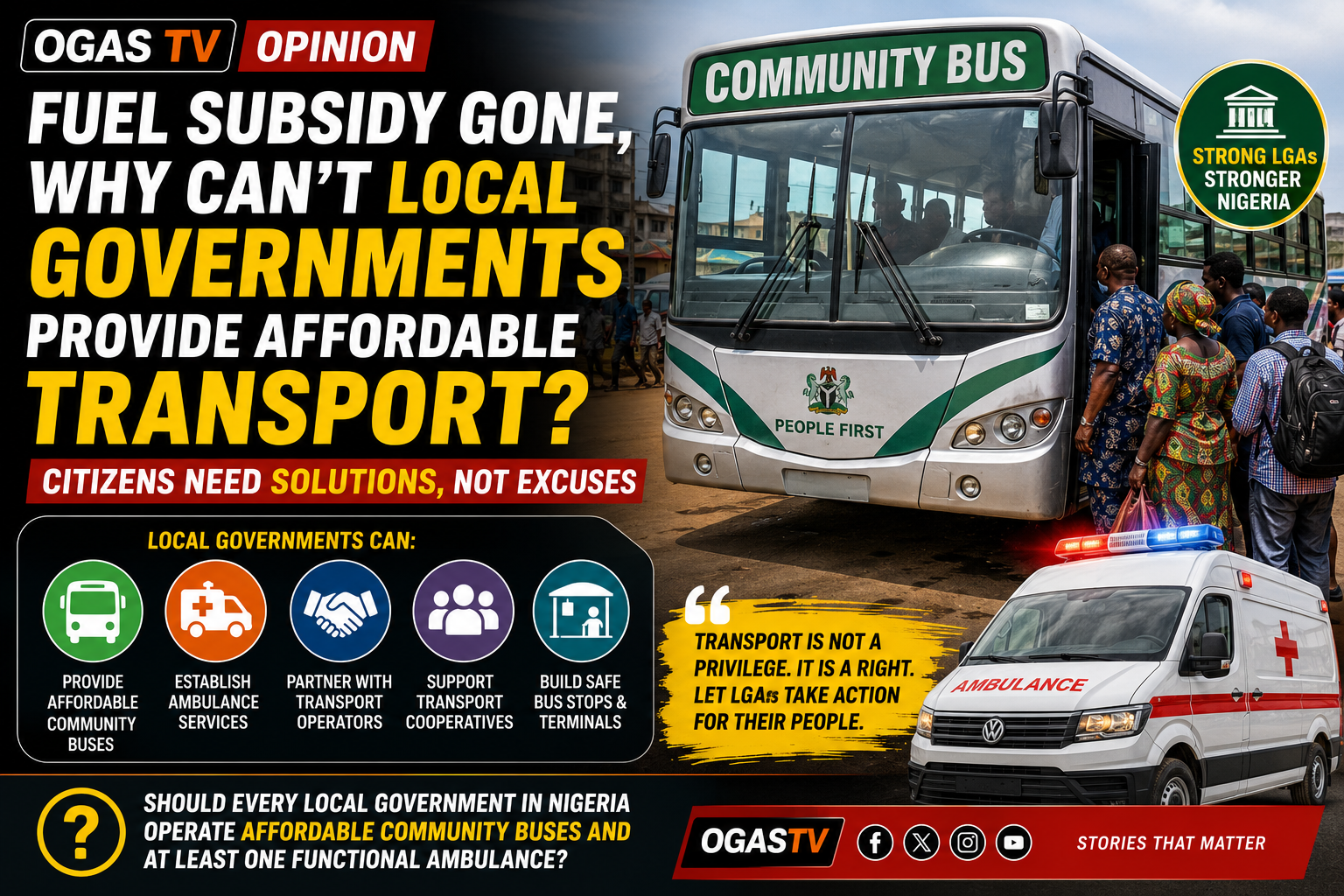
Every day, residents struggle to commute to work, markets, hospitals and schools. Yet many local governments own little or no public transport infrastructure. Rather than relying solely on private commercial operators, councils could explore practical initiatives such as:
- Introducing affordable community shuttle buses on major routes.
- Partnering with private transport operators through subsidised schemes.
- Establishing emergency ambulance services in every local government.
- Supporting transport cooperatives with accessible financing.
- Creating safer and more organised bus stops and terminals.
In many parts of Nigeria, governments have invested in branded buses for political visibility. While such projects can be useful, citizens often ask a more fundamental question:
Shouldn’t every local government first ensure that residents have access to reliable public transport and emergency ambulance services before embarking on projects that offer less direct impact?
Affordable transportation is not just about moving people. It affects school attendance, access to healthcare, small businesses and employment opportunities. A worker who spends a significant share of their income on transport has less money for food, rent and savings.
No single tier of government can solve Nigeria’s transport challenges alone. The Federal Government manages national policies, states oversee major transport systems, while local governments are closest to the people and understand the daily mobility needs of their communities.
Perhaps the time has come for councils to play a more active role in providing practical transport solutions rather than waiting for national economic conditions to improve.
OGAsTV Question of the Day:
Should every Local Government Area (LGA) in Nigeria operate affordable community buses and at least one functional ambulance service for residents?
Share your thoughts in the comments.
Editorial Note: This article is an opinion piece by OGAsTV. The views expressed are intended to encourage public discussion on local governance and public service delivery and should not be interpreted as statements of fact about the performance of any specific local government.