
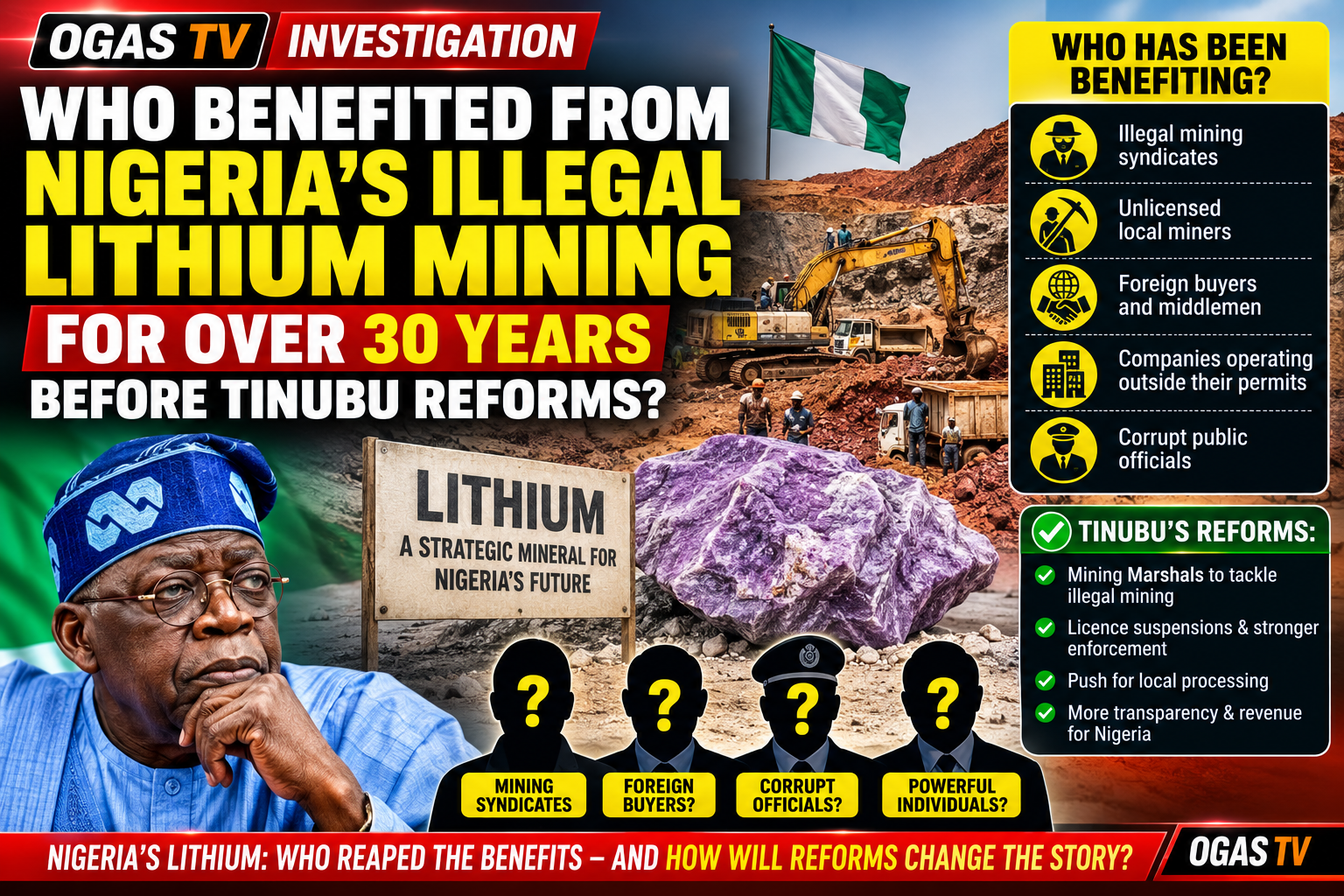
Nigeria’s campaign against illegal lithium mining has intensified since 2023, with the deployment of Mining Marshals, arrests of suspected offenders and tighter regulation of the solid minerals sector. While these actions are important, enforcement alone will not solve the problem. Sustainable reforms are needed to ensure Nigeria benefits fully from its critical mineral resources.
1. Process Lithium in Nigeria Before Export
Instead of exporting raw lithium ore, Nigeria should encourage investment in local processing plants. Processing minerals domestically creates jobs, develops technical expertise and increases government revenue through value addition.
2. Digitise the Mining Sector
Every mining licence should be linked to a digital monitoring system using GPS mapping, electronic permits and real-time production reporting. This would make it more difficult for illegal operators to exploit mineral deposits unnoticed.
3. Strengthen Border Security
A significant amount of illegally mined minerals reportedly leaves Nigeria through neighbouring countries. Customs, immigration and security agencies need better coordination, modern scanning technology and intelligence sharing to curb smuggling.
4. Formalise Artisanal Miners
Many small-scale miners operate informally because they lack access to licences, finance and training. Government should help them join cooperatives, obtain legal permits and adopt environmentally responsible mining practices rather than treating every artisanal miner as a criminal.
5. Hold Corrupt Officials Accountable
Illegal mining cannot thrive without weak enforcement or official complicity. Any public official found to have facilitated illegal mining, licence abuse or mineral smuggling should face transparent investigation and prosecution in accordance with the law.
6. Increase Transparency
The Federal Government should publish:
- All valid mining licences.
- Mineral production figures.
- Royalty payments.
- Licence ownership information where legally appropriate.
- Revenue generated from solid minerals.
Greater transparency would improve public confidence and make it easier to identify irregularities.
7. Empower Host Communities
Communities where lithium is mined should benefit through:
- Better roads.
- Schools.
- Healthcare facilities.
- Clean water projects.
- Employment opportunities.
- Environmental restoration after mining.
When communities benefit legally from mining, they are more likely to support efforts against illegal operators.
8. Encourage Responsible Investment
Nigeria should continue attracting reputable local and international investors willing to comply with environmental, labour and tax laws. Stable regulations and efficient licensing can encourage long-term investment while discouraging illegal activities.
9. Invest in Skills and Research
Universities, polytechnics and technical institutes should offer specialised programmes in mining engineering, geology, mineral processing and battery technology. Building local expertise will help Nigeria move up the value chain instead of remaining a supplier of raw materials.
10. Create a National Critical Minerals Strategy
Lithium is becoming increasingly important for electric vehicle batteries, renewable energy storage and advanced manufacturing. Nigeria needs a long-term strategy that sets clear goals for exploration, local processing, environmental protection, export policy and industrial development.
The Bottom Line
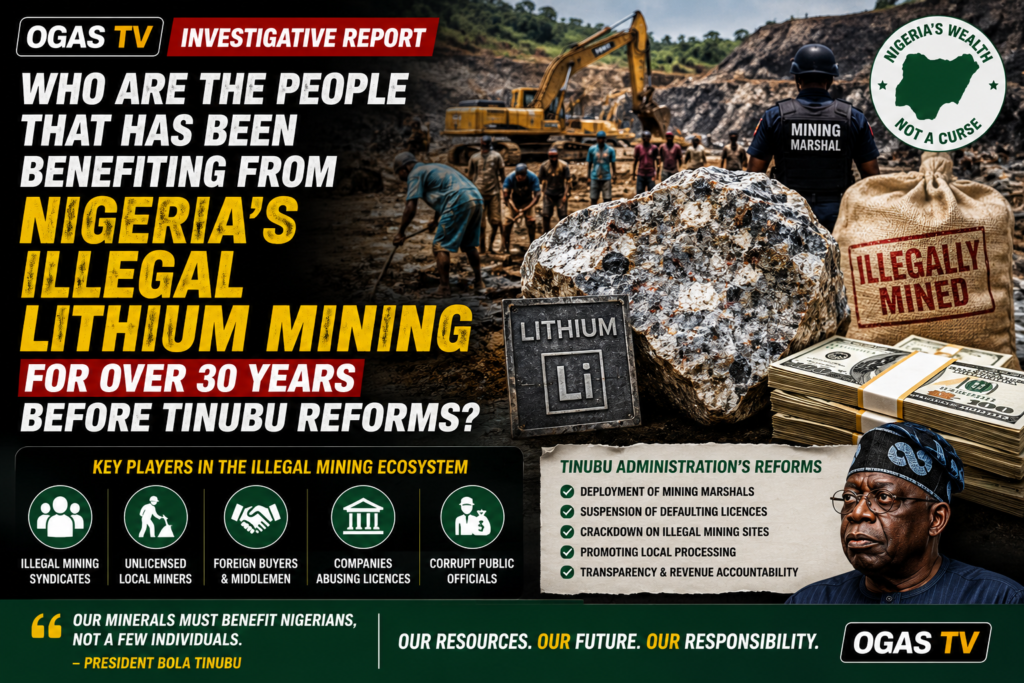
Illegal lithium mining is not simply a law enforcement issue—it is an economic, governance and industrial challenge. Arrests and prosecutions are necessary, but lasting success will depend on stronger institutions, transparent regulation, value addition, community development and consistent enforcement.
If managed effectively, Nigeria’s lithium reserves could help diversify the economy, create thousands of skilled jobs, boost foreign exchange earnings and position the country as a leading player in Africa’s critical minerals industry.
OGAsTV Question of the Day:
Should Nigeria ban the export of raw lithium and require all miners to process the mineral locally before export, or should exports continue while the country gradually builds processing capacity? Share your views in the comments.