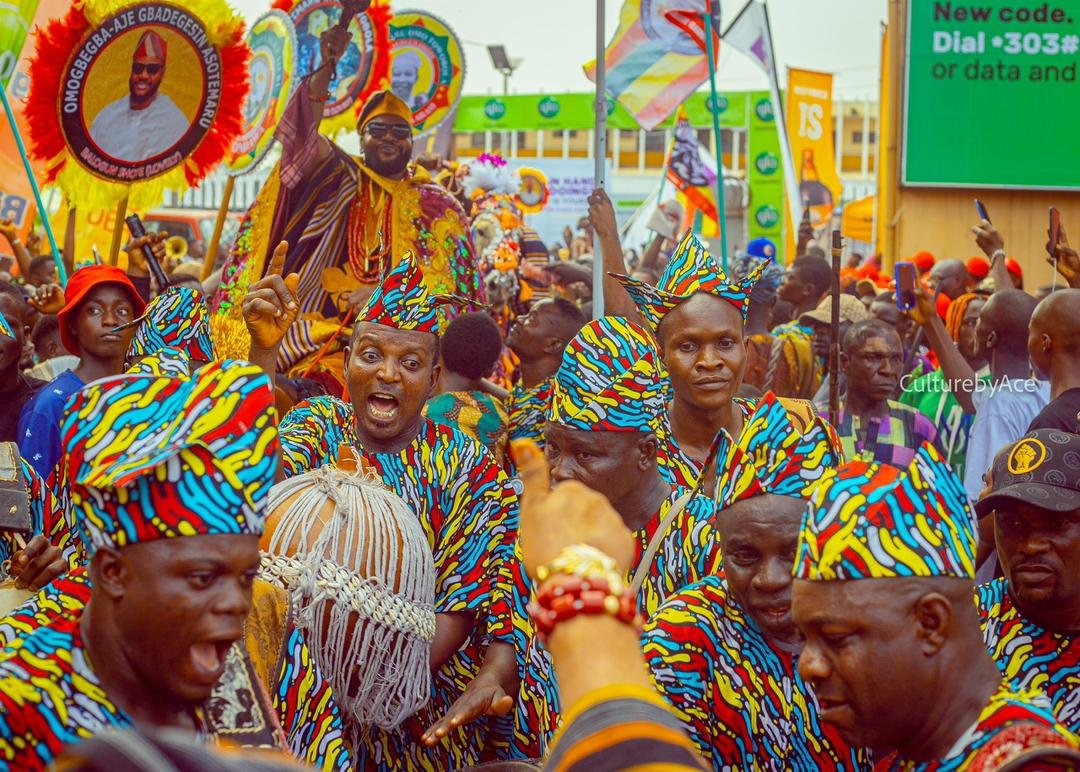
Across two consecutive editions, Nigeria’s most disciplined cultural festival has made the same argument louder each time: culture is not a soft story. It is an economic policy. OgasTv traces how Ojude Oba built a replicable model, and what every Nigerian community, governor, and corporate leader should learn from it.
 THE ARGUMENT
Nigeria Has Been Talking About Cultural Tourism for Decades. Ijebu-Ode Is Actually Doing It.
Every Nigerian government since independence has mentioned culture in its development plans. The language appears in national budgets, tourism white papers, and governor’s speeches from Lagos to Kano. Culture is important. Heritage must be preserved. Tourism will diversify the economy. The words are always there.
What is almost never there is a working model — a specific, annually recurring, independently verified example of Nigerian culture functioning as a genuine economic engine. Ojude Oba is that model. And studying it across two consecutive editions — 2025 and 2026 — reveals not a lucky coincidence but a deliberately constructed system with replicable components.
“This festival has outgrown this place, and we must do something about it.”
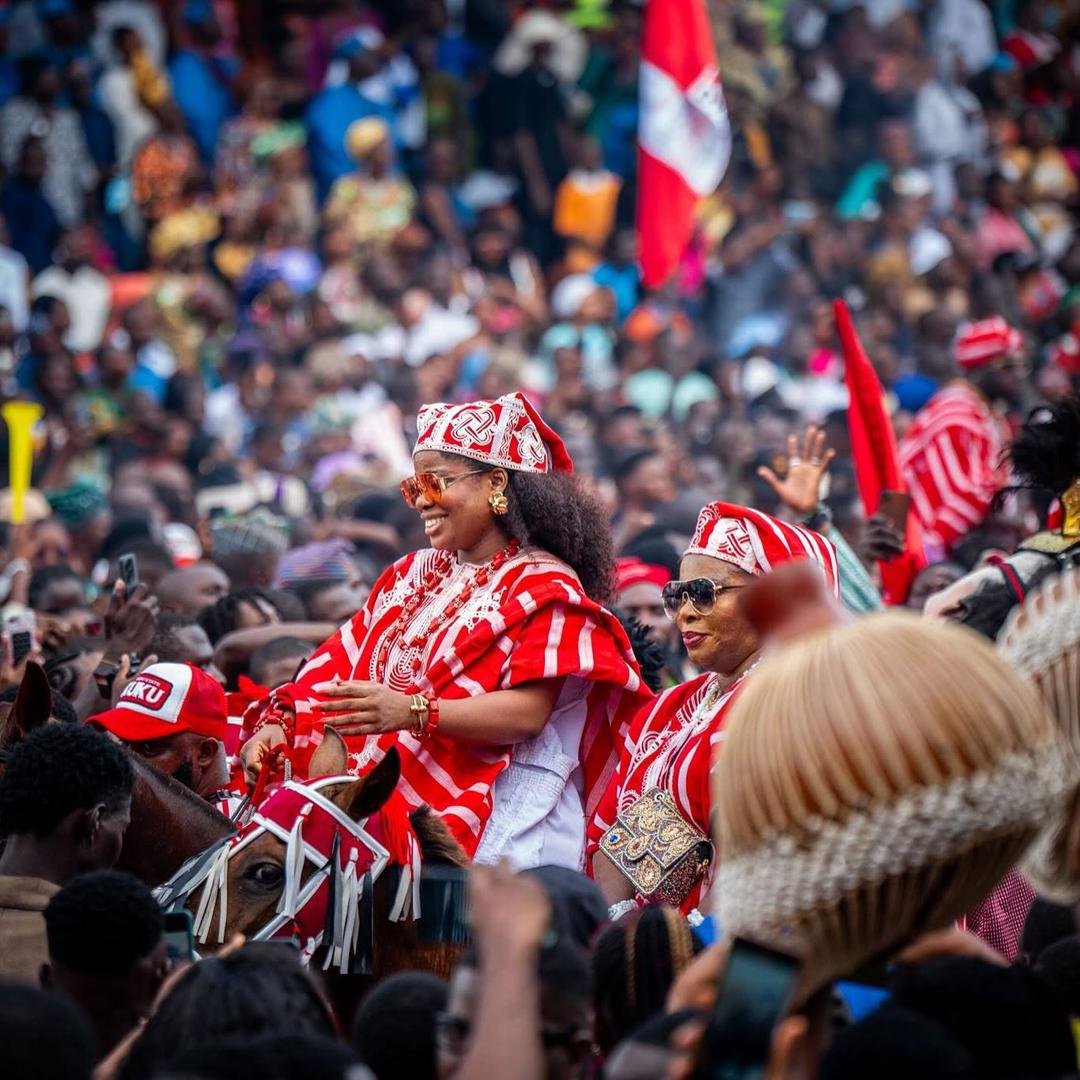 Those words came from Ogun State Governor Dapo Abiodun at the 2025 edition. They were not the words of a politician flattering a crowd. They were the words of a governor confronting the gap between what Ojude Oba has become and what the infrastructure around it can currently support. Hotels fill up. Roads congest. Visitors overflow. The festival’s demand has exceeded its container — and that is the most honest indicator of genuine success a cultural event can produce.
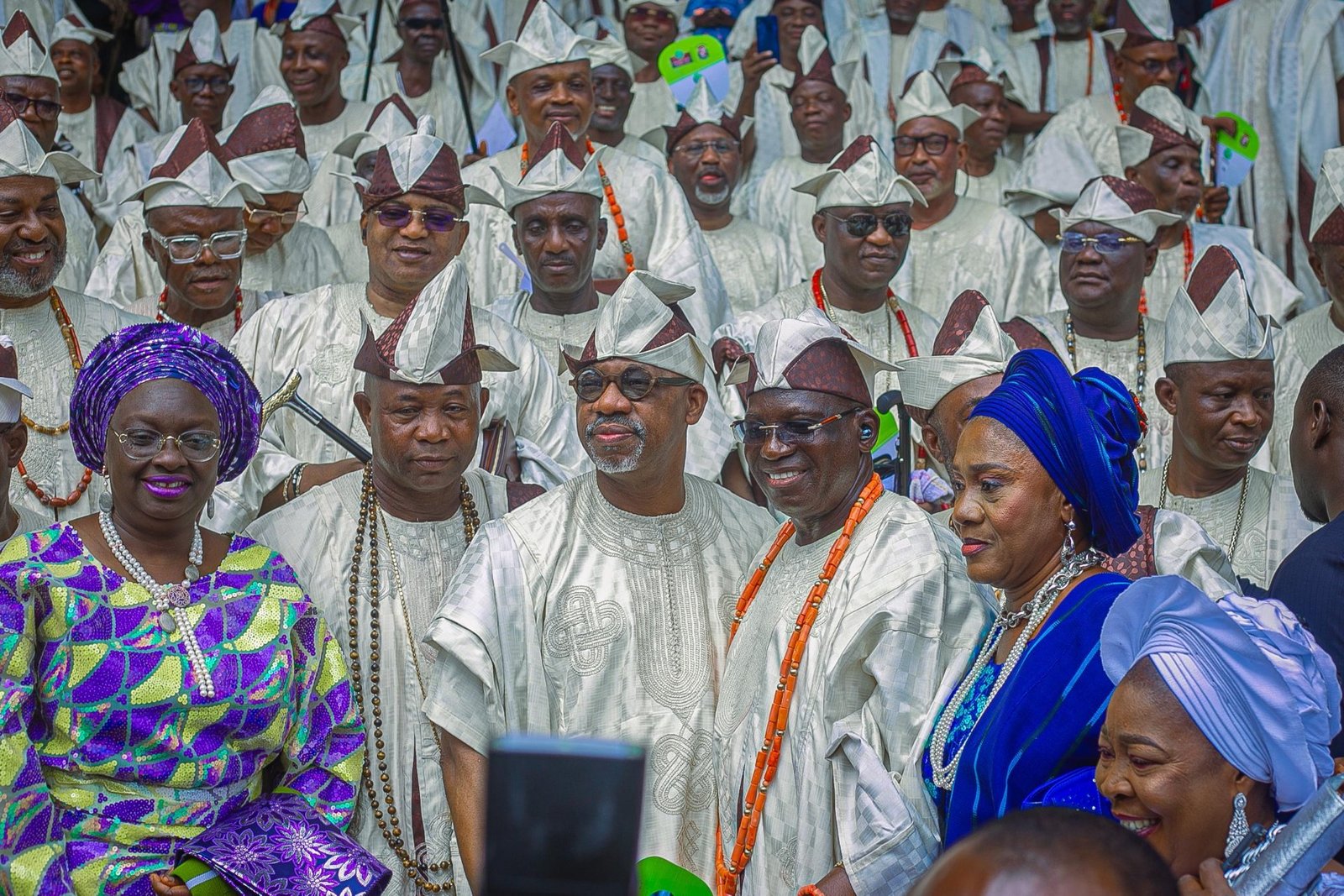
The 2025 edition of Ojude Oba, held on the third day after Eid al-Kabir at the Ojude Oba Pavilion in Ijebu-Ode, assembled a remarkable convergence of federal and state authority around a single cultural event. Governor Dapo Abiodun of Ogun State attended, alongside the Minister of Art, Culture, Tourism and the Creative Economy, Hon. Hannatu Musa-Musawa, and the Deputy Governor of Ondo State representing Governor Lucky Aiyedatiwa.
The presence of federal and multi-state representation at a local cultural festival is itself a governance signal: this is not a community event. It is a national asset being managed at the community level.
The 2025 theme — “Celebrating Our Roots, Preserving Our Future” — captured the festival’s dual function: it looks backward into history and forward into opportunity simultaneously. Governor Abiodun put it with unusual directness: Ojude Oba has become “a dynamic entity of tourism, youth engagement, and entrepreneurship.” He pledged his administration would expand its reach and impact. He also issued what sounded like a warning and a challenge in the same breath: “This festival has outgrown this place, and we must do something about it.”
The Minister of Tourism’s statement at the 2025 edition was equally significant. She explicitly disclosed that the federal government is working with state governments to tap into the unique culture of each state for national development — signalling that Ojude Oba’s model has caught the attention of the federal policy machinery. The Ogun State Commissioner for Culture and Tourism, Hon. Sesan Abolaji Fagbayi, was actively engaged in the Globacom pre-event press conference, demonstrating state-level institutional buy-in at every tier.
The 2026 edition was the first Ojude Oba held since the passing of the Awujale of Ijebuland, Oba Sikiru Kayode Adetona, in July 2025 — after an extraordinary 65-year reign that fundamentally shaped the festival’s growth, discipline, and international ambition. Without the Awujale who modernised the festival and gave it institutional backbone, the 2026 edition could have faltered. Instead, it grew.
A regent council, headed by Olorogun Sunny Kuku, received tributes in his stead. The decision to hold the festival — to honour rather than mourn in absence — was itself a statement: the institution the Awujale built is larger than any single reign. Globacom Chairman Dr. Mike Adenuga described the late monarch as one “whose wisdom and steadfast devotion to cultural preservation elevated Ijebuland to global prominence.”
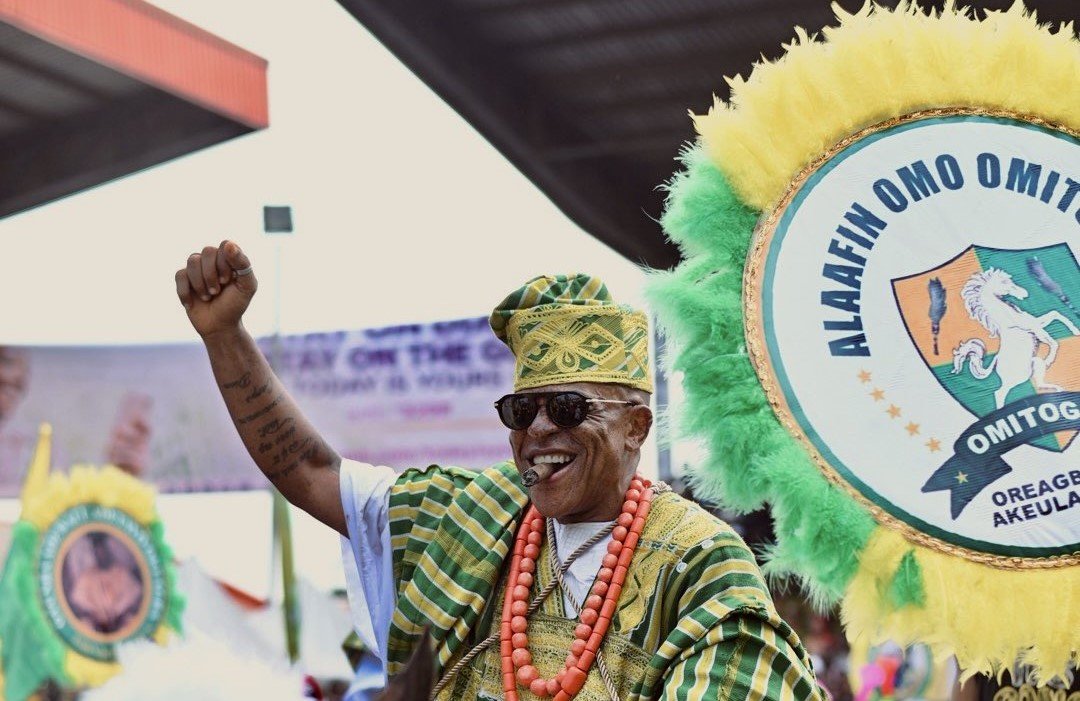
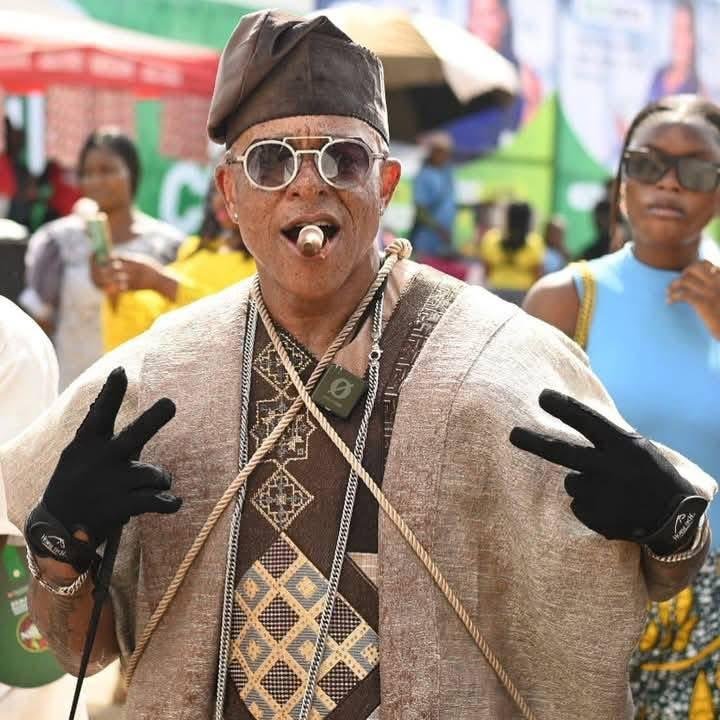
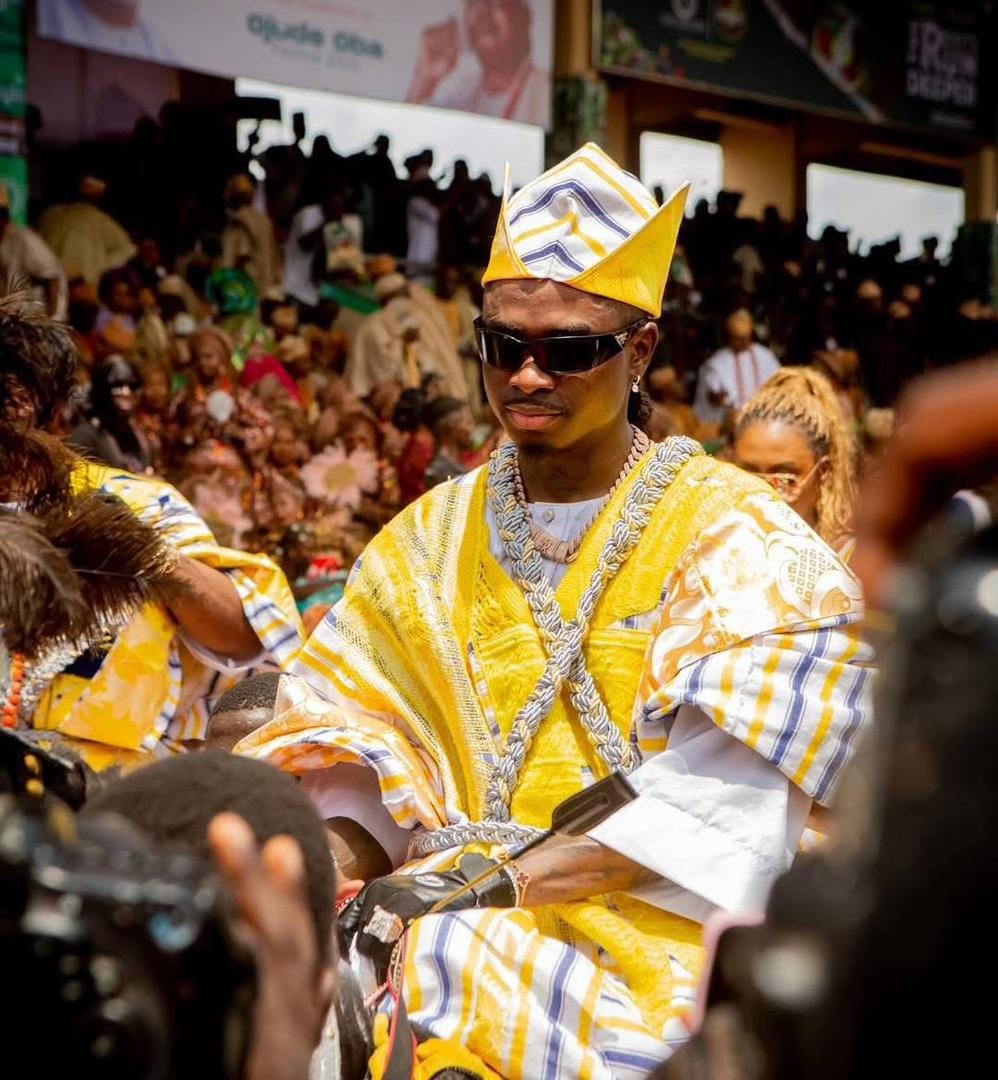
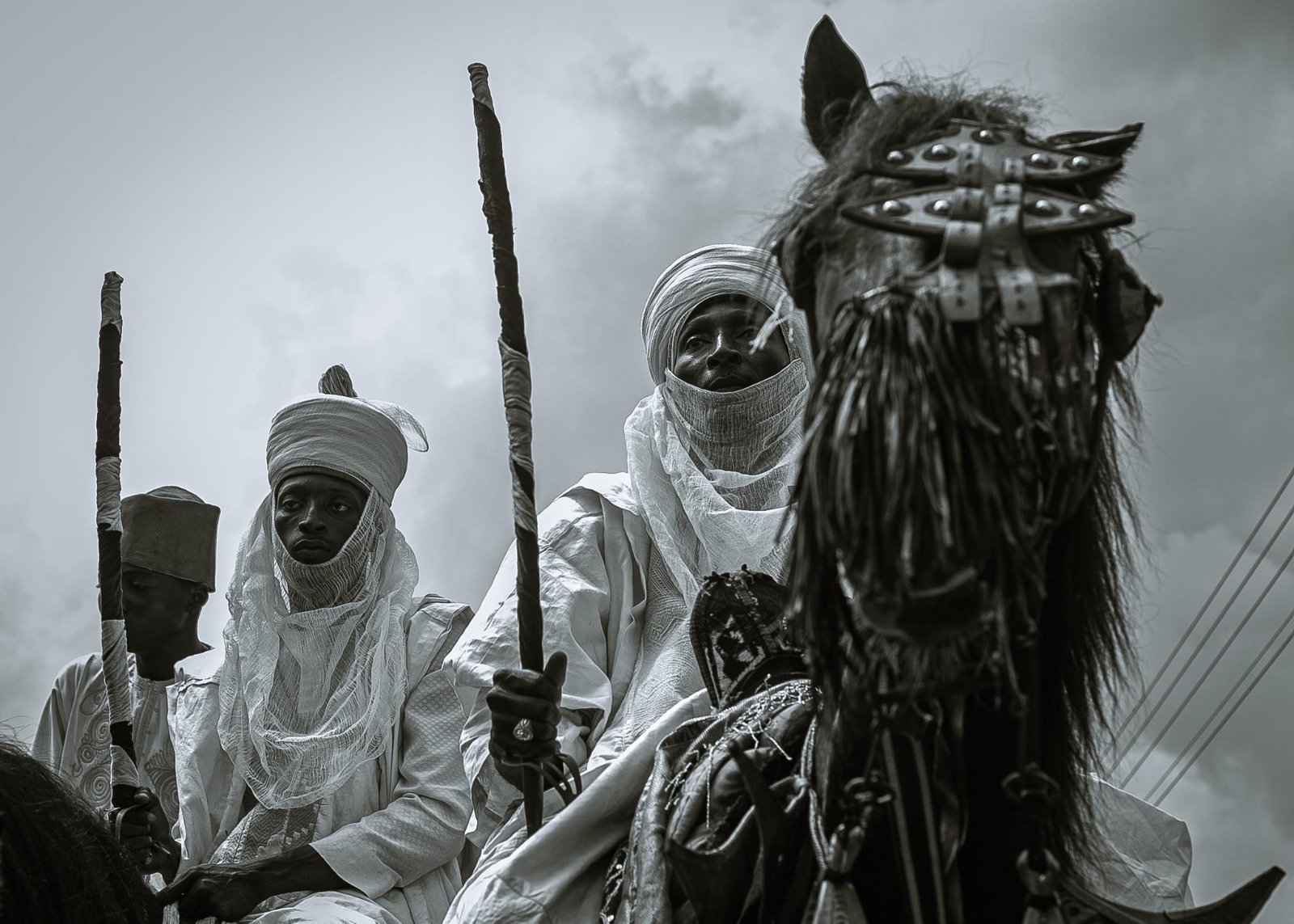
The 2026 edition, held May 29, brought nearly 100 Regberegbe age-grade groups to the pavilion — competing in coordinated attire that represents months of planning and community investment. The Balogun horse-riding families demonstrated the martial heritage of Ijebu warriors. And Globacom — in its 21st unbroken year of sponsorship — distributed brand new cars, tricycles, power generators, grinding machines, and Basmati rice across the community, while awarding over ₦4.6 million in competitive cash prizes.
“In an era where globalisation threatens indigenous identity, the festival reminds us that a people who preserve their culture ultimately preserve their future.”
— DR. MIKE ADENUGA JR., CHAIRMAN, GLOBACOM (MAY 29, 2026)
Governor Abiodun returned with more specific economic data this time. Hotels were fully occupied. Businesses were flourishing. Artisans were engaged. Youths were productively empowered. He had moved from aspiration in 2025 to evidence in 2026. The same minister, Hannatu Musa-Musawa, described the festival as “a shining testament of the richness of our cultural diversity and the resilience of our traditional institutions in preserving history for future generations.”
The 2026 competition results documented below reflect the festival’s meritocratic culture — the same families and age-grade groups compete every year, with public accountability for who performed best and why.
Male Regberegbe
| PLACE | GROUP | PRIZE |
|---|---|---|
| 1st | Egbe Bobakeye Okunrin Akile Ijebu | ₦750,000 |
| 2nd | Egbe Bobagunte Okunrin Akile Ijebu | ₦600,000 |
| 3rd | Egbe Bobamayegun Okunrin Akile Ijebu | ₦500,000 |
Female Regberegbe
| PLACE | GROUP | PRIZE |
|---|---|---|
| 1st | Egbe Arobayo Obinrin Precious | ₦750,000 |
| 2nd | Egbe Jagunmolu Obinrin Stainless | ₦600,000 |
| 3rd | Egbe Bobamayegun Obinrin Aremo | ₦500,000 |
Eleshin — Horse Riding Families
| PLACE | GROUP | PRIZE |
|---|---|---|
| 1st | Balogun Kuku Family | ₦750,000 |
| 2nd | Balogun Oreagba Family | ₦600,000 |
| 3rd | Balogun Shoye Family | ₦500,000 |
Beyond the competitive prizes, Globacom used the 2026 festival to reward ordinary community members whose stories say more about civic culture than any prize ceremony could.
Five Things That Make Ojude Oba Work — That Most Nigerian Festivals Are Missing
OgasTv has studied two editions and the broader history of this festival. The following patterns explain why Ojude Oba succeeds where most Nigerian cultural events struggle.
INSTITUTIONAL ANCHOR — THE AWUJALE’S PALACE
Ojude Oba is not run by a government committee that changes with every election. It is rooted in the Awujale’s palace — an institution that has existed for centuries and survived colonialism, civil war, and modernity. That institutional permanence gives the festival authority, discipline, and continuity that no government-run event can match. Even when the Awujale passed in 2025, the festival did not collapse. The regent council stepped in. The institution held. That is the power of traditional authority when it is respected and supported rather than undermined.
LONG-TERM CORPORATE PARTNERSHIP — NOT ONE-OFF SPONSORSHIP
Globacom has sponsored Ojude Oba for 21 consecutive years. Not a three-year deal. Not a one-off activation. Twenty-one unbroken years. That duration has produced something neither party could have manufactured quickly: genuine community trust. Residents do not see Globacom as a sponsor. They see it as part of the festival. That brand integration is worth infinitely more than any advertising campaign — and it was built through consistent commitment, not a big budget. Every Nigerian corporation chasing short-term brand visibility should study this model carefully.
MERITOCRATIC COMPETITION — PUBLIC ACCOUNTABILITY BUILT IN
The Regberegbe and Eleshin competitions are judged publicly, by named committees, with transparent prize amounts published and distributed at the event. Every group knows the criteria. Every family knows what winning requires. This creates a culture of excellence and preparation — groups spend months designing outfits, rehearsing formations, and investing in their presentation. Public competition with public results is a form of accountability that makes the festival self-improving year on year.
COMMUNITY INCLUSION — NOBODY IS LEFT OUT
In 2026, Globacom distributed Basmati rice to all Regberegbe groups — not just the winners. Power generators and grinding machines went to community members. A car was given through community nomination to a servant-leader, and another through an airtime draw to a trader in Ijebu Igbo. The festival deliberately ensures that ordinary residents — not just elite performers — feel the economic benefit. That inclusion is what makes communities defend the festival, invest in it, and return to it every year.
POLITICAL WILL WITHOUT POLITICAL CONTROL
Governors attend Ojude Oba. Ministers attend. But they do not run it. The festival is not a government programme. Government provides visibility, infrastructure support, and policy backing — but the Awujale’s palace and the Ijebu community retain ownership. This separation is critical. When government runs cultural festivals, the festivals become political events that die when administrations change. When community institutions run festivals and government supports them, the festivals outlive every government. Ogun State’s model — consistent political championship without political control — is the template Nigeria needs.
What Every State, Every LGA, and Every Corporate Leader Should Take From This
TOURISM ECONOMY
Hotels fully booked. Restaurants overflowing. Transport busy. One cultural day generates what months of conventional marketing cannot. Nigeria’s 774 LGAs each have at least one cultural asset. Most generate nothing economically. That gap is a governance failure.
FASHION INDUSTRY
Regberegbe groups commission luxury coordinated outfits annually — creating sustained demand for Yoruba textile artisans, tailors, bead makers, and hat craftspeople. This is fashion as economic policy.
DIASPORA ENGAGEMENT
Ijebu sons and daughters abroad return for Ojude Oba, bringing foreign exchange, investment interest, and cultural reconnection. Cultural festivals are Nigeria’s most organic diaspora pipeline — requiring no ministry, no programme, no foreign trip.
TRADITIONAL INSTITUTIONS
Ojude Oba demonstrates that traditional institutions are not relics — they are governance infrastructure. When respected and resourced, they deliver community cohesion that elected governments struggle to manufacture.
CORPORATE BRANDING
Globacom’s 21-year model proves that cultural investment builds loyalty no advertising can match. Nigerian brands spending billions on celebrity endorsements and social media should study what consistent community investment delivers.
PLURALISM
Ojude Oba unites Muslims, Christians, and traditional worshippers in shared celebration without tension. In a Nigeria where religion is routinely weaponised, a festival that celebrates across belief systems is a civic treasure worth protecting at policy level.
The Question Nigeria Must Answer Before 2027
Across two editions, Governor Abiodun made the same argument with increasing urgency. In 2025: “This festival has outgrown this place.” In 2026: “Hotels are fully occupied, businesses are flourishing.” The evidence is now undeniable. Ojude Oba works. The model is visible. The question is no longer whether cultural festivals can drive economic development in Nigeria. The question is why only one or two festivals have reached this level — and what is stopping the other 773 local governments from building theirs.
The answer is not money. Ojude Oba’s success was not built with government budgets. It was built with institutional continuity (the Awujale’s palace), community discipline (the Regberegbe system), and corporate consistency (Globacom’s 21-year commitment). None of those require a government cheque. They require leadership, patience, and a long-term view.
The calls for UNESCO recognition of Ojude Oba deserve serious pursuit. A festival that has run continuously for generations, unites multiple faith traditions, preserves warrior heritage through horsemanship, and drives measurable economic development meets every criterion the UNESCO Intangible Cultural Heritage programme requires. The Nigerian government’s formal nomination process should begin immediately — and OgasTv will track whether it does.
The most important story from 2026, however, was not the cars or the cash prizes. It was Opeoluwa Osisanwo — a 52-year-old community servant who spent years as Festival Secretary without expecting reward, and whose community quietly watched him and decided he deserved a car. That is what civic culture looks like when it is healthy. Communities that produce Opeoluwas will always produce Ojude Obas. The question for every OgasTv reader is: what is your community producing?
How to Replicate the Ojude Oba Model in Your Community
- TRADITIONAL RULERSEvery traditional institution in Nigeria — Obas, Emirs, Igwes, Obongs — should identify and formally document the cultural events within their domain and establish permanent organising committees with clear mandates and succession plans. Culture without institutional ownership dies.
- STATE GOVERNMENTSEvery state government should identify one flagship cultural festival per geopolitical zone, allocate a dedicated infrastructure budget — roads, parking, pavilions, sanitation — and pursue at least one long-term corporate co-sponsor. Ogun State’s model is the template.
- CORPORATE NIGERIAFollow Globacom’s 21-year example. Commit to a community cultural event for at least five years before evaluating brand return. Cultural brand equity is built over decades, not quarters. The return when it comes is deeper and more durable than any media buy.
- FEDERAL GOVERNMENTThe Ministry of Art, Culture, Tourism and the Creative Economy should publish a National Cultural Festival Calendar — with UNESCO nomination status, tourism infrastructure needs, and economic impact data for each major festival. Nigeria’s culture deserves the same policy infrastructure as its oil sector.
- COMMUNITIESIdentify your community’s cultural event. Document it. Register it with your LGA and state tourism board. Recruit age-grade groups or community associations to anchor it institutionally. Approach local businesses for year-one sponsorship. Start small. Start consistent. Start now.
- MEDIACover cultural festivals as economic and civic stories — not entertainment fillers. Publish the prize amounts. Name the winners. Report the hotel occupancy rates. Ask the governor how many new roads were built to support festival access. Culture deserves the same rigour as politics.
What You Can Do — Starting This Week
What cultural festival in your state or LGA has the potential to become Nigeria’s next Ojude Oba — and what is stopping it from getting there?
DROP YOUR ANSWER · SHARE THIS DEEP-DIVE · TAG YOUR GOVERNOR, YOUR TRADITIONAL RULER, AND YOUR LGA CHAIRMAN
What OgasTv Verified Across Both Editions
- News Connect Online — “Ojude Oba Festival, Others Critical in Promoting Local Economy, Attracting Global Visibility — Abiodun” (June 9, 2025)
- The Punch — “Ojude Oba 2026: Tradition, Tourism, and the Changing Face of Yoruba Heritage” (June 2026)
- Vanguard News — “Glo Showers Cash on Age Grades, Horse Riders at Ojude Oba 2026” (May 2026)
- TheCable — “Glo Rewards Age Grades, Horse Riders at Ojude Oba 2026” (May 2026)
- Pulse Nigeria — “Ojude Oba 2026: Glo Rewards Excellence in Culture, Tradition” (May 2026)
- Independent Newspaper Nigeria — “Globacom Marks 21 Years of Ojude Oba Festival Sponsorship” (May 2026)
- Linda Ikeji’s Blog — “2026 Ojude Oba: Glo’s Spectacle of Honours and Rewards” (May 2026)
- 9jahotgist — “Ojude Oba 2026: Celebrating Yoruba Culture and Tourism” (June 2026)
- Globacom Nigeria — Official Press Release on Ojude Oba 2026 Prizes (June 2026)