A new phase of the Lagos-Calabar Coastal Highway project is bringing the conversation closer to residents, property owners and businesses along the Lagos corridor.
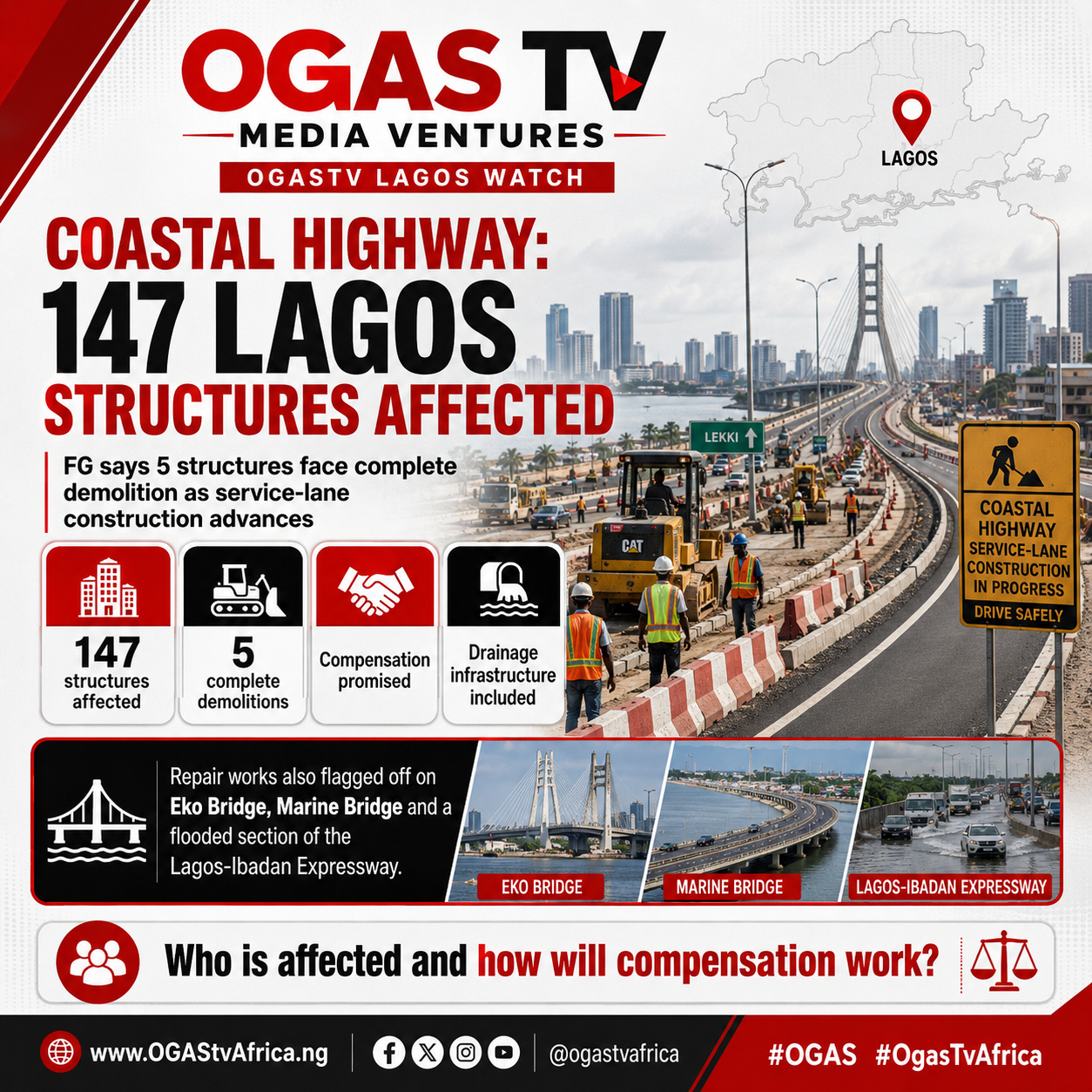
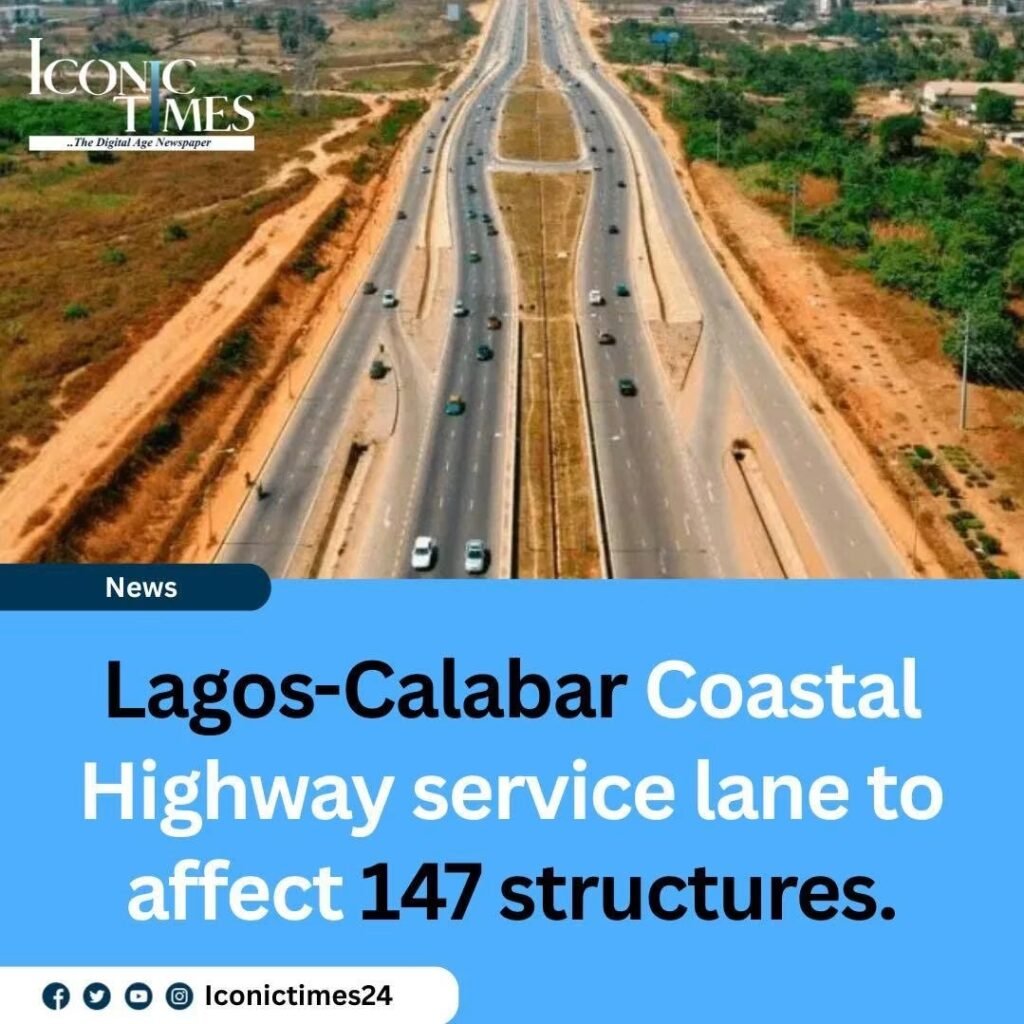
President Bola Ahmed Tinubu announced on August 9, 2026, during a stakeholder engagement in Lagos, that construction of the highway’s service lane will affect 147 structures, with five expected to require complete demolition.
The Federal Government also said affected property owners will be compensated.
This is an important distinction for public reporting. The announcement does not mean that all 147 structures will be demolished. Current reporting specifically identifies five structures for complete demolition, while the remaining 142 are described as being affected by the service-lane construction.
The development matters because it shifts the Coastal Highway story from general construction progress into a direct question of property rights, compensation, access and community impact.
For residents and businesses along the affected corridor, the central questions are now practical: Who exactly is affected? Have formal notices been issued? How will properties be valued? When will compensation be paid? And what happens if a property owner disputes the valuation?
Reporting from the stakeholder engagement also indicates that the service-lane works will include secondary drainage infrastructure. That is significant in Lagos, where flooding and poor drainage continue to affect major transport corridors and adjoining communities.
The Federal Government’s announcement also came alongside the formal flag-off of repair works on the Eko Bridge, Marine Bridge and a flooded section of the Lagos-Ibadan Expressway.
Taken together, these projects point to a broader federal intervention in Lagos transport infrastructure rather than an isolated highway announcement.
What is currently verified is clear. President Tinubu announced the 147-structure figure. The Federal Government says compensation will be provided. Multiple credible news organisations, including Vanguard, Nigeria Info and The Nation, reported the development.
What remains unclear is equally important.
There is not yet a publicly available property-by-property schedule showing the exact locations of all 147 affected structures, their ownership status, compensation values or payment dates. There is also no publicly available breakdown showing how many of the affected properties are residential, commercial or mixed-use.
For OgasTv, those unanswered questions are where the strongest grassroots story begins.
The next stage of reporting should focus on the people behind the numbers: property owners, tenants, traders and communities who may be affected by the service-lane construction.
Key questions include:
- Where exactly are the 147 affected properties located?
- What does “affected” mean for the 142 structures not facing complete demolition?
- What valuation method will the Federal Government use?
- Will compensation be paid before possession, access or business operations are disrupted?
- Is there a formal appeal process for property owners who disagree with their valuation?
- How will the secondary drainage works affect surrounding communities?
The wider infrastructure context also deserves attention. With works advancing on the Coastal Highway while repairs begin on Eko Bridge, Marine Bridge and the Lagos-Ibadan Expressway, Lagos residents may experience both long-term infrastructure benefits and short-term disruption.
That makes transparency, notice periods, compensation and traffic management central to public confidence.