OGASTV AFRICA | Opportunity Watch
⸻
QUICK SUMMARY
Lagos has a housing deficit of roughly 3.4 million units and gains 500,000 to 600,000 new residents every year. That gap between supply and demand is the single biggest reason real estate remains one of the most reliable places to build wealth in Nigeria today — but where exactly the opportunity sits has shifted, and knowing the difference between a trophy purchase and a growth-corridor bet now matters more than ever.
⸻
WHAT HAPPENED
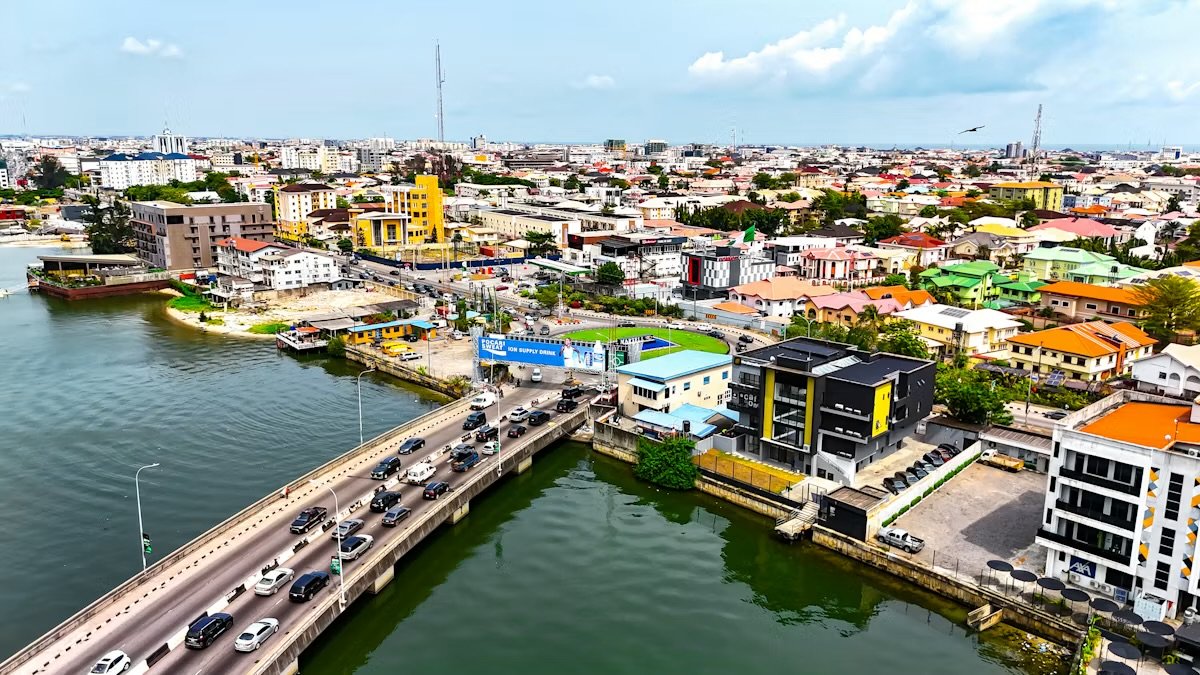
Lagos real estate enters the second half of 2026 in what analysts are calling a “Golden Growth Phase,” driven less by speculation and more by two hard facts: a housing shortage that refuses to close, and a wave of infrastructure spending that is physically opening up new parts of the city.
At the top of the market, luxury property values have climbed sharply — a tracked portfolio of ten investment properties rose from ₦9.3 billion in December 2024 to ₦25.6 billion by February 2026, with Ikoyi properties alone appreciating between 132% and 176% in that window. Naira devaluation has pushed both local and diaspora investors toward real estate as an inflation hedge, since property, unlike cash, tends to hold value when the currency weakens.
But the more important story for most people is happening lower down the market and further out geographically. The Ajah–Sangotedo corridor has evolved from a peripheral area into a genuine middle-income residential hub — a one-bedroom apartment that rented for ₦500,000 in 2020 now averages ₦2 million. Yaba, Lagos’s tech hub, has seen even sharper growth: a studio apartment averaging ₦300,000 in 2020 is now around ₦1.5 million, driven by demand from students and young tech workers.
Two infrastructure projects are actively reshaping where the next wave of growth will land: the Lagos–Calabar Coastal Highway, which is pushing land prices in Ibeju-Lekki and Epe up by as much as 35% year-on-year, and the Fourth Mainland Bridge, which is unlocking new value in Ikorodu and Ajah by shrinking the mainland–island divide.
⸻
WHY DID IT HAPPEN
The core driver is structural, not speculative: Lagos’s population is growing by hundreds of thousands of people every year, and formal housing construction has never come close to matching that pace. On top of that, naira devaluation and persistent inflation have made real estate attractive as a way to preserve wealth rather than hold cash. Finally, two once-in-a-generation infrastructure projects — the Coastal Highway and the Fourth Mainland Bridge — are physically changing which parts of Lagos are reachable and desirable, and land prices are moving in anticipation of that change before it’s even finished.
⸻
WHY SHOULD CITIZENS CARE
Real estate in Lagos isn’t only a story about the wealthy buying Ikoyi villas. It’s a story about where ordinary working people will be able to afford to live, and where a modest saver can realistically build equity over time. Corridors like Ajah-Sangotedo show that meaningful appreciation is possible outside the traditional elite zones — but the same data shows rents in those “affordable” corridors have already multiplied four-fold since 2020, meaning the window to enter affordably is narrowing, not widening.
⸻
WHAT CAN GOVERNMENT DO
• Accelerate delivery of the Lagos-Calabar Coastal Highway and Fourth Mainland Bridge, since these two projects alone are already reshaping land values before completion — faster delivery means faster, broader-based opportunity.
• Expand mortgage financing options. Most Lagos property buyers still pay cash; a thin mortgage market locks out anyone without large upfront capital.
• Strengthen title verification systems. Reports already warn that “the premium on title integrity will rival the premium on location” in 2026 — government digitisation of land titles would protect ordinary buyers from fraud.
• Encourage affordable, formal housing supply at scale in emerging corridors before speculative pricing locks out the middle class entirely.
⸻
WHAT CAN CITIZENS DO
• Look at growth corridors, not just prestige addresses. Ibeju-Lekki, Epe, Ikorodu, and Ajah are where infrastructure-driven appreciation is happening now, at a fraction of Ikoyi or Banana Island prices.
• Consider land-banking in emerging zones rather than waiting to afford a finished property in an already-expensive district.
• Verify title before buying anything. With title integrity now described as commanding a premium equal to location itself, due diligence is not optional — confirm documentation, developer credibility, and land use approvals before committing funds.
• Think rental yield, not just capital appreciation, if the goal is income. Areas like Lekki Phase 1, Yaba, Magodo, and Ajah currently offer stronger cash-flow potential than ultra-prime zones.
⸻
WHAT OPPORTUNITIES EXIST
• Growth-corridor land purchases in Ibeju-Lekki, Epe, and Ikorodu, where prices are still a fraction of established districts but rising fastest on infrastructure news.
• Mixed-use development investment, benefiting from Lagos’s growing e-commerce, tech, and SME sectors, which prefer integrated residential-retail-office spaces.
• Rental property in mid-market corridors such as Ajah-Sangotedo and Yaba, where strong tenant demand from students, young professionals, and tech workers supports steady occupancy.
• Diaspora investment schemes — Nigerian real estate platforms increasingly offer structured, remote-friendly investment products aimed at diaspora buyers seeking naira-hedged assets.
⸻
WHAT LEADERSHIP LESSON CAN AFRICA LEARN
Lagos’s housing story is a reminder that infrastructure decisions are also economic opportunity decisions. A single bridge or highway doesn’t just move traffic — it can move billions of naira in land value into new communities, often benefiting whoever positions early rather than whoever has the most capital. The lesson for leaders across Africa’s fast-growing cities: where you choose to build a road often decides who gets to build wealth next.
⸻
ABOUT OGASTV OPPORTUNITY WATCH
Opportunity Watch is OgasTv Africa’s series dedicated to surfacing real, current opportunities across business, finance, education, and innovation — helping Africans see not just what is happening in their economy, but where they can practically get involved.
TODAY IS LAGOS…Stay tuned for the next opportunity.
OGASTV: Connecting People To Leadership.
By K OYEGBADE ADENIYI.