
OGASTV NIGERIA
Connecting People to Leadership · Voice of Africa

Nigeria’s Senate Has Passed the State Police Bill.
BREAKING NEWS
· JUNE 24 2026
OGASTV EDITORIAL TEAM ◆
◆ 8 MIN READ
Here Is What It
Actually Means for You.
POLICY EXPLAINED
After 66 years of centralized policing, Nigeria has taken its biggest step toward state-controlled security. But this is not yet law and the concerns ordinary citizens should know about are just as important as the celebration.
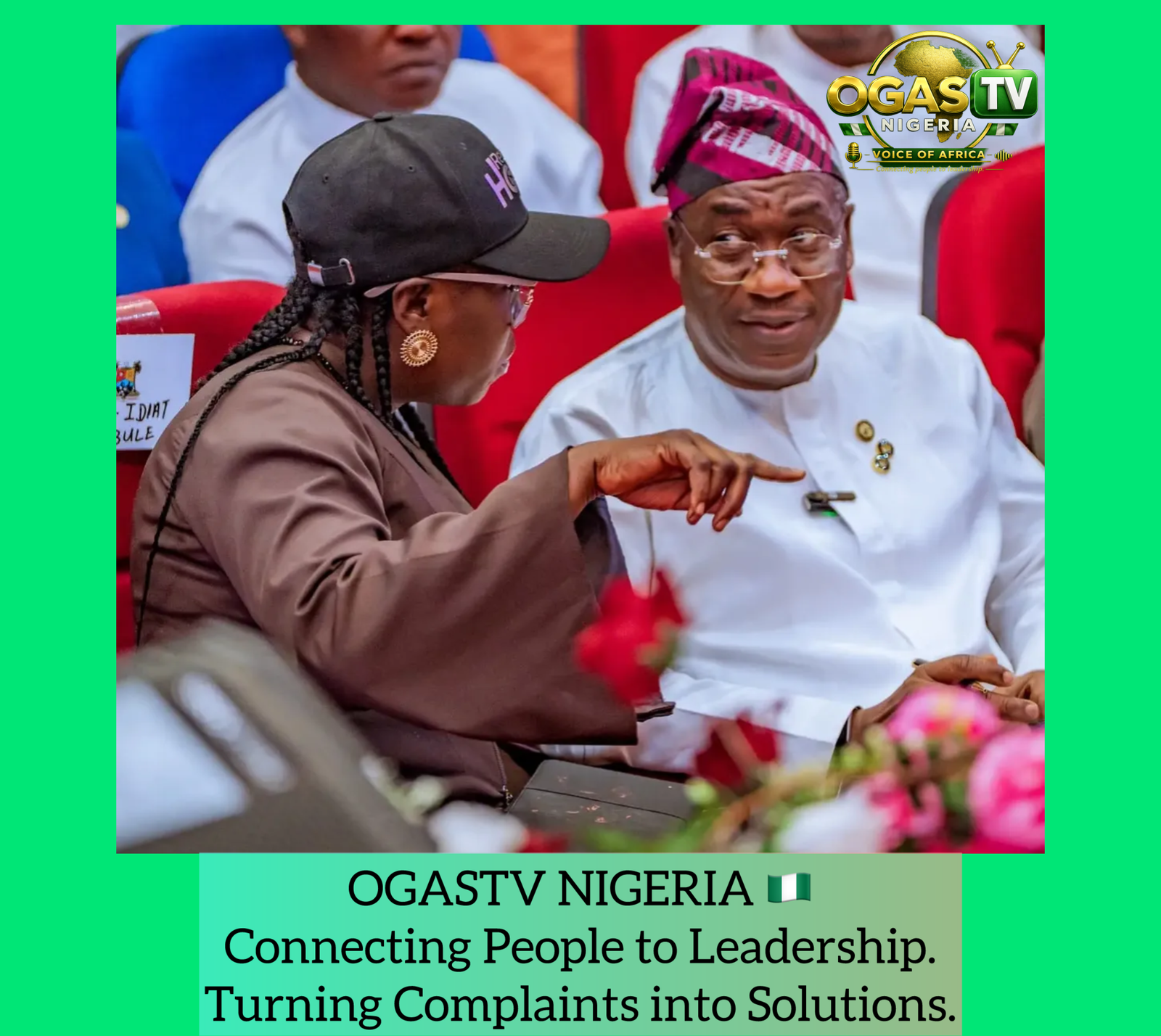
On Wednesday June 24, 2026, Nigeria’s Senate passed the Constitution of the Federal Republic of Nigeria (Alteration) (State Police) Bill, 2026 — by a manual show of hands after electronic voting systems failed. More than two-thirds of senators voted yes on all 26 clauses. The bill was transmitted by President Tinubu and ends Nigeria’s 66-year centralised police model. But it is NOT yet law. It still needs 24 of Nigeria’s 36 state assemblies to ratify it. Here is what is in it, what is still missing, and what ordinary Nigerians should watch carefully.
THE STORY
What Just Happened — And Why It Is Historic.
For 66 years, Nigeria has operated one of the most centralised policing
systems in the world for a country its size. A single Nigeria Police Force controlled from Abuja, answering to the federal government has been expected to police over 200 million people across 36 states, 774 local governments, and some of the most diverse and complex security
terrain on earth. Analysts have long described this as structurally indefensible. The results have been devastating. Bandits operate with near impunity
across vast ungoverned spaces in the Northwest. Terrorists have killed
tens of thousands in the Northeast. Kidnapping has become a national
industry. Governors have been blamed for insecurity in their states but given no formal operational power over the police operating within those states. Communities have watched villages burn while police stations sat minutes away, waiting for instructions from distant
command chains.
““Nigeria is a vast Federation with diverse cultures, languages, geographical terrains, and security dynamics. The present structure limits local authorities from responding swiftly and effectively.”
— SENATE LEADER OPEYEMI BAMIDELE, JUNE 24, 2026
On June 23, President Tinubu formally transmitted the State Police Bill to the Senate. On June 24, in a session watched by governors, senior ministers, and the Chief of Staff to the President, the Senate passed all 26 clauses with a decisive two-thirds majority voting manually after
the chamber’s electronic voting system crashed and could not be revived for over 30 minutes. It was a moment Nigerians had debated, delayed, and deferred for
decades. The House of Representatives had already advanced its own reading. Now the Senate has voted. What remains is ratification by state assemblies.

WHAT THE BILL ACTUALLY SAYS
The Key Provisions — In Plain English
OgasTv has read the bill. Here is what it does, translated from legislative language to plain citizens’ terms:
Nigeria’s police force is now split into two. The existing Nigeria Police Force is replaced by a Federal Police Service and, for each state that chooses to establish one, a State Police Service. Both operate simultaneously.
Governors can appoint their own Commissioner of Police — but only with confirmation by the State House of Assembly. This is a major shift: previously, the President alone controlled all police appointments.
Governors CANNOT weaponise state police. The bill expressly prohibits directing state police against specific persons, political parties, or groups for partisan, ethnic, religious, or personal purposes. Violating this is a constitutional offence.
The President can temporarily take controlof any state police under defined emergency conditions — including if the state police is found to be violating human rights, engaging in electoral intimidation, or operating outside the constitution. This requires written justification and Senate oversight.
A state cannot just wake up and create police tomorrow.Each state must first pass its own law establishing a State Police Service, then meet national minimum standards certified by an Act of the National Assembly before becoming operational.
The Police Trust Fund allocation is doubled. The Senate also passed a companion bill raising the Police Trust Fund allocation from 0.5% to 1% of the Consolidated Revenue Fund — to help finance the new dual policing structure.
WHAT HAPPENS NEXT
This Is Not Yet Law — Here Are the Steps Still Remaining
IMPORTANT
The viral post circulating says “we got this.” Constitutionally speaking,
Nigeria has not fully got this yet. The Senate vote is a massive
milestone but three more steps remain before state police becomes
the law of the land.
STEP 1
Senate passage DONE. Passed June 24, 2026 with more than two-thirds majority (80+ senators voting yes on all 26 clauses).
STEP 2
House of Representatives — Already Advanced. The House
had passed related bills to second reading. Full passage is
expected imminently.
STEP 3
24 State Houses of Assembly must ratify the amendment.Under Nigerian constitutional law, any alteration to the constitution requires approval by at least two-thirds (24 of 36) state legislatures. This is the critical final hurdle and the most politically complex.
STEP 4
Presidential Assent. Once the state assemblies ratify, the bill returns to President Tinubu for his signature. Only then does it become part of Nigeria’s constitution and binding law.
WHY THIS MATTERS
What This Means for Ordinary Nigerians If It Works.
THE CASE FOR STATE POLICE
THE GENUINE CONCERNS
✅ THE CASE FOR STATE POLICE
- Faster response times — police who live and know your community can reach you faster
- Better local intelligence — community-based policing gathers better information on local criminals
- Governors become accountable — they can no longer blame Abuja for every security failure
- Rural areas get coverage — vast ungoverned spaces that federal police cannot adequately reach
- Models like Amotekun in the Southwest show community security can work
- Every large federal nation — USA, Germany, India — uses state-level policing
⚠️ THE GENUINE CONCERNS
- Governors who are “emperors” could use police to crush opposition ahead of 2027 elections
- Ethnic and religious bias in recruitment could deepen divisions in multi-ethnic states
- Weak state finances — many states cannot fund their own police force sustainably
- Constitutional safeguards exist on paper — enforcement is the real question
- State SIEC abuses show how governors exploit state-controlled institutions
- South-South youth groups and civil society have formally rejected the current model
What Citizens Should Think — Not What Politicians Are Saying
The viral post circulating says “Thank you daddy Tinubu — we got this.” OgasTv’s and the citizens job is not to echo celebrations or dismiss them. Our job is to give you the full picture so you can form your own judgment.
The truth is: this is a genuine milestone. For 66 years, Nigerians have watched their security architecture fail them at scale. The argument for state police that policing must be closer to communities to be effective is sound and supported by evidence from every large federation on earth. President Tinubu championed this since 1999. The Senate has now acted. That deserves acknowledgement.
But the concern is equally real. Nigeria’s political history is not a history of governors exercising restraint with power. It is a history of state-level institutions from SIECs to local government caretaker committees being weaponised for political survival. Giving governors their own armed police force, even with constitutional safeguards, is a serious risk in a system where the rule of influence still competes daily with the rule of law.
The safeguards in this bill are better than nothing. They are not better than strong institutions, an independent judiciary, and a culture of accountability none of which Nigeria yet has in full. The law is only as powerful as its enforcement. Watch the state assemblies. Watch the appointments. Watch 2027.
COMMUNITY SOLUTIONS
How Communities Can Make State Police Work
— Or Hold It Accountable.
CITIZENS :Learn the anti-abuse provisions in this bill by name. Know
that a governor directing state police against a political party is unconstitutional. Know your rights. Document any abuse.
Report it to your state assembly, the judiciary, and the media.
CIVIL SOCIETY :Civil society organisations must immediately begin
drafting model accountability frameworks for state police oversight independent police complaints commissions, civilian review boards, and community liaison officers and lobby state assemblies to adopt them before ratifying the bill.
STATE ASSEMBLIES :The 36 state Houses of Assembly are now the most
important institutions in Nigeria. Citizens must pressure their state representatives to attach local accountability conditions to their ratification not rubber-stamp it for political loyalty.
MEDIA :OgasTv Nigeria and other civic media must begin monitoring and publishing the voting record of every state assembly member on this ratification. Nigerians must know who voted for it, who against, and on what terms.
YOUTH :With 2027 elections approaching, young Nigerians must demand that every gubernatorial candidate discloses their plan
for state police how they will fund it, who will oversee it, and what accountability mechanisms they will establish.
LGAS :Legal experts like Ubani have warned that state police may fail without strong local governments. Citizens should link this reform to the ongoing LGA autonomy battle strong LGAs are the community foundation that makes local policing work.
What You Can Do This Week
1Find out who represents your constituency in your State House of Assembly. They will vote on ratifying this bill.
2Contact your state assembly member — call, WhatsApp, or attend their constituency office — and ask: “What conditions will you attach to your ratification of the State Police Bill?”
3Collect your PVC if you have not. The people who appoint and control state police will be elected governors. Your vote at the 2027 governorship election matters more than ever.
4Share this article — not just the headline, but the full picture. An informed Nigeria is a safer Nigeria.
5If you see a governor misusing state police after this becomes law, report it to the National Human Rights Commission (NHRC) and your nearest federal court. The constitution gives you that right.
6Support civil society organisations tracking state police implementation. They are your watchdog — they need your attention, signal-boosting, and donations to do their work.
COMMUNITY QUESTION
Do you trust your state governor to have command over an armed police force or does this power worry you more than the insecurity it is meant to solve?
DROP YOUR ANSWER IN THE COMMENTS · TAG YOUR STATE ASSEMBLY MEMBER · SHARE THIS ARTICLE
FACT CHECK STATUS
Do you trust your state governor to have command over an armed police force or does this power worry you more than the insecurity it is meant to solve?
DROP YOUR ANSWER IN THE COMMENTS · TAG YOUR STATE ASSEMBLY MEMBER · SHARE THIS ARTICLE
What Is Verified
VERIFIED: The Senate passed the Constitution (Alteration) State Police Bill 2026 on June 24, 2026. All 26 clauses passed by more than two-thirds majority (80+ senators). — Source: Tribune Online, Legit.ng, Voice of Nigeria, The Sun, Vanguard
VERIFIED: The bill was transmitted by President Tinubu and creates a dual Federal Police Service and State Police Services structure. — Source: The Nation, allAfrica, Washington Times
VERIFIED: The bill still requires ratification by at least 24 of 36 state Houses of Assembly and presidential assent before becoming law. — Source: Punch, CrimeFocusNews
VERIFIED: The Senate’s electronic voting system failed. Senators voted manually by raising their hands, with each senator counted individually. — Source: allAfrica, Tribune Online
IMPORTANT CONTEXT: The viral social media post saying “we got this” is premature. The bill is historic and real — but it is not yet law. Ratification by state assemblies remains the critical and most politically uncertain step.
REFERENCES
- Tribune Online — “Senate Passes State Police Bill” (June 24, 2026)
- Legit.ng — “Breaking: Nigerian Senate Finally Passes Constitutional Amendments to Establish State Police” (June 24, 2026)
- The Sun Nigeria — “State Police: How Senators Passed Historic Constitutional Amendment Under Watchful Eyes of Presidency, Governors” (June 24, 2026)
- allAfrica / Vanguard — “Nigeria: Senate Passes State Police Bill — It’s Now Federal, State Police Service” (June 25, 2026)
- The Punch — “How We’ll Prevent Governors from Abusing State Police — Senate” (June 24, 2026)
- Voice of Nigeria — “Nigerian Senate Passes State Police Bill” (June 24, 2026)
- Channels TV — “There Are Safeguards to Address Abuse of State Police — Gov Sani” (June 24, 2026)
- Vanguard — “State Police May Fail Without Strong Local Governments — Ubani” (June 25, 2026)
- Leadership Nigeria — “South-South Youths Reject State Police, Demand Comprehensive Reform” (June 25, 2026)
- Washington Times — “Nigeria’s Senate Passes Bill to Allow Creation of State Police to Tackle Insecurity” (June 24, 2026)
- PRNigeria — “State Police Proposal and the Urgency of Now” (April 2026)
- OGASTV NIGERIA · VOICE OF AFRICA
- CONNECTING PEOPLE TO LEADERSHIP · TURNING INFORMATION INTO UNDERSTANDING · BUILDING CITIZENS THAT BUILD NATIONS
- THIS ARTICLE IS PART OF THE POLICY EXPLAINED SERIES.
- OGASTV DOES NOT SUPPORT OR OPPOSE ANY POLITICAL PARTY OR CANDIDATE. WE SUPPORT INFORMED CITIZENS.
- © 2026 OGASTV NIGERIA. ALL RIGHTS RESERVED.
- Tribune Online — “Senate Passes State Police Bill” (June 24, 2026)
- Legit.ng — “Breaking: Nigerian Senate Finally Passes Constitutional Amendments to Establish State Police” (June 24, 2026)
- The Sun Nigeria — “State Police: How Senators Passed Historic Constitutional Amendment Under Watchful Eyes of Presidency, Governors” (June 24, 2026)
- allAfrica / Vanguard — “Nigeria: Senate Passes State Police Bill — It’s Now Federal, State Police Service” (June 25, 2026)
- The Punch — “How We’ll Prevent Governors from Abusing State Police — Senate” (June 24, 2026)
- Voice of Nigeria — “Nigerian Senate Passes State Police Bill” (June 24, 2026)
- Channels TV — “There Are Safeguards to Address Abuse of State Police — Gov Sani” (June 24, 2026)
- Vanguard — “State Police May Fail Without Strong Local Governments — Ubani” (June 25, 2026)
- Leadership Nigeria — “South-South Youths Reject State Police, Demand Comprehensive Reform” (June 25, 2026)
- Washington Times — “Nigeria’s Senate Passes Bill to Allow Creation of State Police to Tackle Insecurity” (June 24, 2026)
- PRNigeria — “State Police Proposal and the Urgency of Now” (April 2026)
- OGASTV NIGERIA · VOICE OF AFRICA
- CONNECTING PEOPLE TO LEADERSHIP · TURNING INFORMATION INTO UNDERSTANDING · BUILDING CITIZENS THAT BUILD NATIONS
- THIS ARTICLE IS PART OF THE POLICY EXPLAINED SERIES.
- OGASTV DOES NOT SUPPORT OR OPPOSE ANY POLITICAL PARTY OR CANDIDATE. WE SUPPORT INFORMED CITIZENS.
- © 2026 OGASTV NIGERIA. ALL RIGHTS RESERVED.