Folarin Balogun’s red card still stands. The punishment for it doesn’t — for now. Inside FIFA’s rare use of Article 27, and the backlash it’s triggered on the eve of the round of 16.
SANTA CLARA / ZURICH
ROUND OF 16 — USA vs. BELGIUM
12 RED CARDS ISSUED · 1 SUSPENDED
Folarin Balogun will start for the United States against Belgium on Tuesday. Four days ago, the rules said he couldn’t. What changed wasn’t the tackle, the video evidence, or the referee’s account of what happened on the pitch — it was FIFA’s willingness to intervene on the punishment itself.
What happened on the pitch
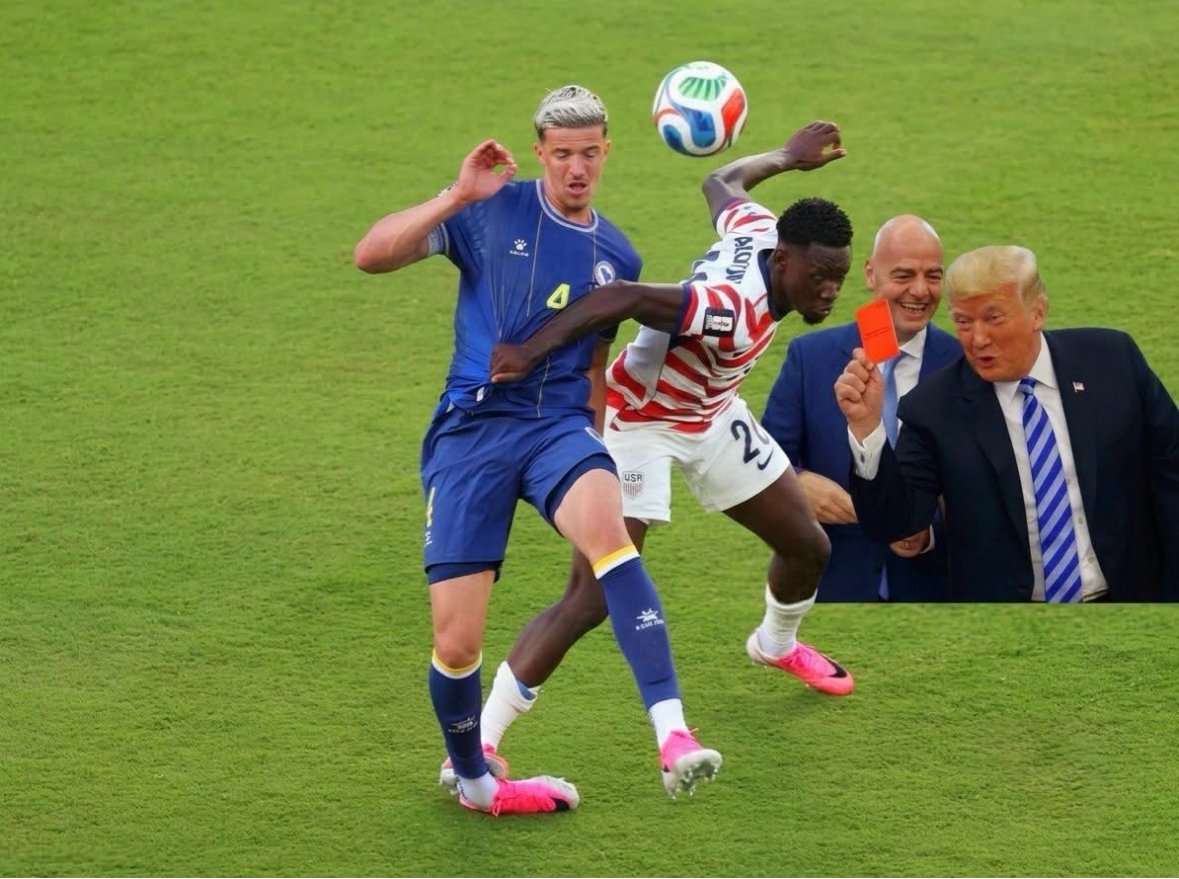
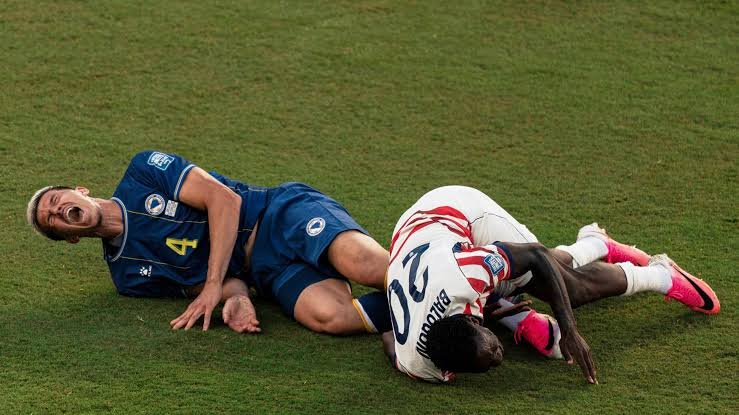
In the 64th minute of the USA’s 2-0 win over Bosnia-Herzegovina on July 1 in Santa Clara, Balogun — who’d opened the scoring in the 45th — clashed with Bosnia’s Tarik Muharemovic while both players challenged for the ball. The referee waved play on. VAR didn’t. Sent to the monitor, referee Raphael Claus reversed course and issued a red card for serious foul play, and the U.S. played the final 26 minutes of regulation, plus 10 of stoppage time, a man down. They won anyway.
The reaction from people who watch football for a living was notably sympathetic to Balogun. Manager Mauricio Pochettino called it a normal, accidental football action with no intent behind it. Andy Davies, a referee with Premier League VAR experience, told ESPN he didn’t think it met the bar for a red card — that it looked worse in slow motion than it was in real time.
MINUTE – 64′
OFFENSE – Serious foul play, via VAR review
STANDARD PENALTY – Automatic one-match ban, non-appealable
OUTCOME – Ban suspended for one year, on probation
What FIFA actually suspended
This is the detail easiest to get wrong, and it matters. FIFA did not overturn the red card. It did not wipe the offense from Balogun’s record. He is still shown as having been sent off against Bosnia-Herzegovina. What FIFA suspended was the automatic ban that comes attached to that card — the sentence, not the conviction.
It works something like a suspended sentence in a courtroom. The red card stays on the books. The punishment for it — missing the Belgium match — is paused for a one-year probationary period rather than cancelled outright.
If Balogun commits a similarly serious offense within that year, the original ban is revoked and enforced, stacked on top of whatever penalty follows the new incident.
Why this is so unusual
Ordinarily, this category of red card allows no recourse whatsoever. FIFA’s own competition regulations state that a player sent off this way is automatically suspended for the team’s next match, full stop — nothing in that section mentions an appeals process. Contrast that with red cards for violent conduct, which carry three-match bans that can be appealed and reduced, as happened for Cristiano Ronaldo during World Cup qualifying, where a three-match ban was cut to one.
FIFA’s justification leaned on Article 27 of its disciplinary code, a provision that lets a judicial body fully or partially suspend a disciplinary measure. It’s a real rule — just not one built with this scenario obviously in mind, which is part of why its use here has raised eyebrows.
12 RED CARDS, TOURNAMENT
1 BAN SUSPENDED
3 GOALS SO FAR
1 yr PROBATION PERIOD
The call that changed things
ABC confirmed that President Trump personally phoned FIFA after the Bosnia-Herzegovina match to ask president Gianni Infantino to review the red card. When the reversal came through, Trump posted his approval publicly, and the White House’s own social account amplified it.
“Thank you to FIFA for doing what was right, and reversing a great injustice!”— President Trump, via social media
The backlash
BELGIAN FOOTBALL ASSOCIATION
Said it was “astonished” by the decision and is “investigating all potential options,” framing the ruling as a threat to fair play at this World Cup and future ones.
GARY NEVILLE, SKY SPORTS PUNDIT
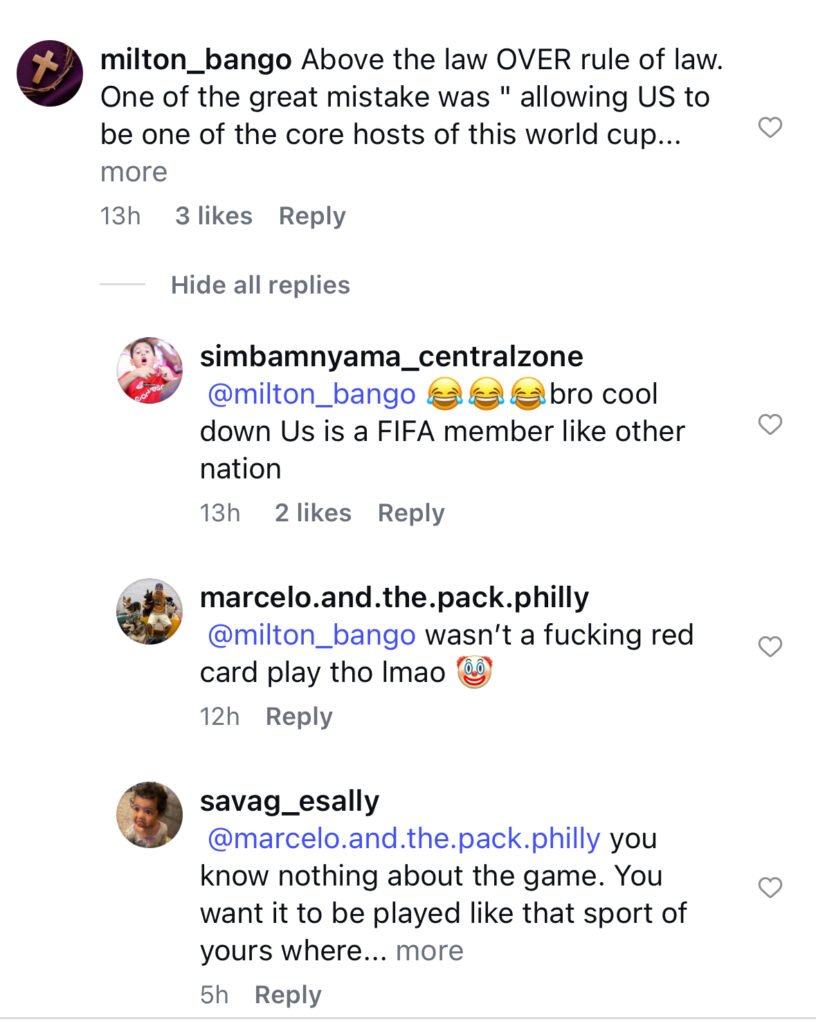
Didn’t mince words: “It absolutely stinks.” His objection lands less on the tackle itself and more on the mechanism — that no formal review process exists for this class of card at all, so FIFA reached for a tool that wasn’t built for the job.
MAURICIO POCHETTINO, USA HEAD COACH
Rejected the idea his team benefited unfairly: “If anyone was harmed in this whole situation, it was the United States… playing 30 or 35 minutes a man down in a World Cup knockout match? It’s not as if we’re benefiting.”
Balogun starts against Belgium with three goals to his name this tournament, a red card still on his record, and its penalty held in reserve for a year. What’s left unresolved isn’t really about one tackle in Santa Clara — it’s whether political pressure can reach into FIFA’s disciplinary process and bend an outcome, and what that means for the next contested card, involving the next team, with no president willing to make the call on their behalf.
Online Reviews
Sourced from ESPN, Sky Sports, ABC News, and Yahoo Sports reporting on FIFA’s disciplinary ruling, July 2026.