Nigeria Fiscal Federalism Watch — revenue-sharing reform.
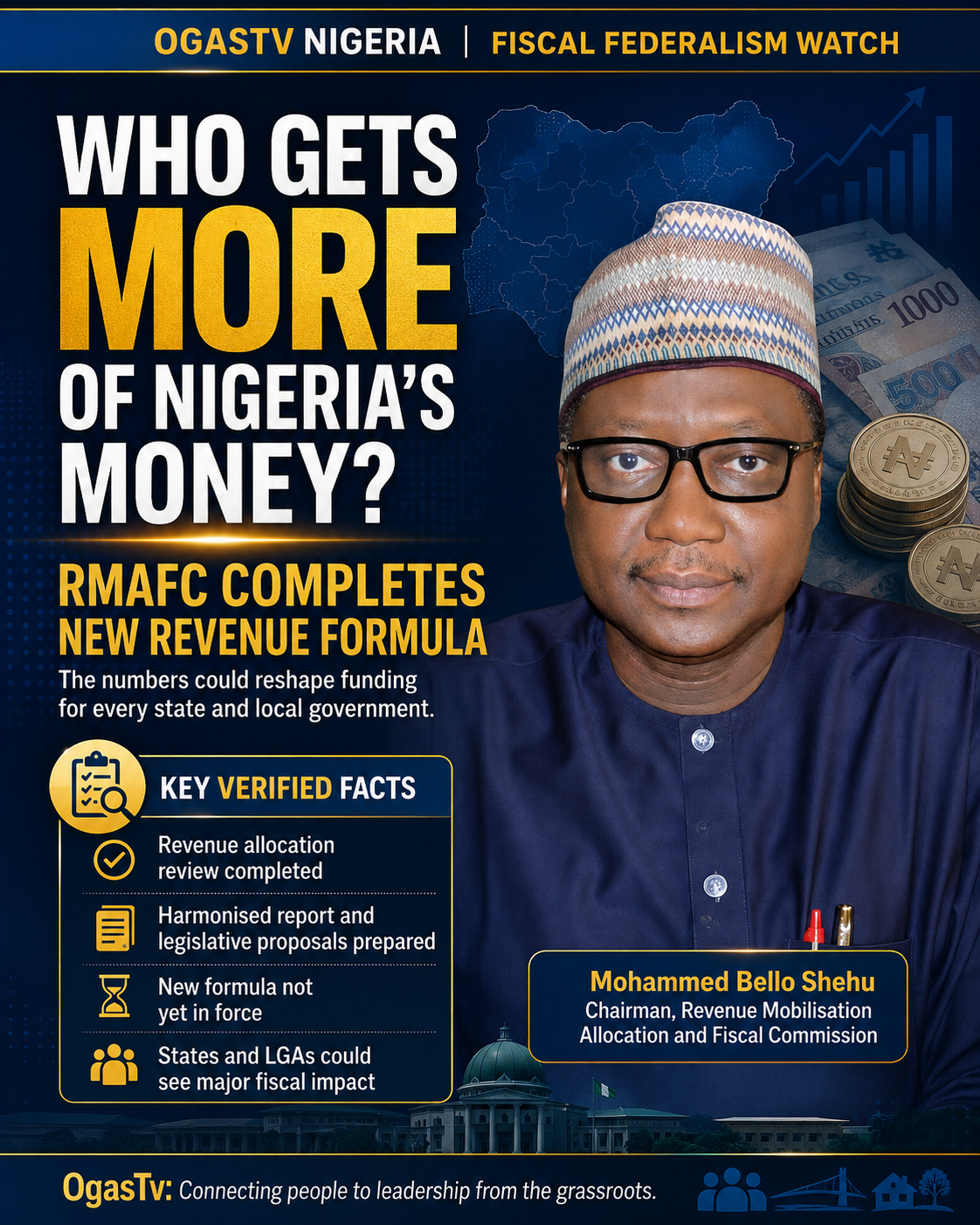
The Revenue Mobilisation Allocation and Fiscal Commission has disclosed that it has completed its comprehensive review of Nigeria’s Revenue Allocation Formula, setting the stage for a potentially major restructuring of how Federation Account revenues are divided among the federal, state and local governments. RMAFC Chairman Mohammed Bello Shehu disclosed the development during an engagement with the Nigerian Guild of Editors in Lagos; a statement by RMAFC’s Head of Information and Public Relations, Maryam Yusuf, was issued on Saturday, August 15, with the development reported early Sunday, August 16, 2026.
This is materially different from earlier announcements that the review was merely underway or at an “advanced stage.” RMAFC says consultations and technical work have now produced a harmonised report and legislative proposals ready for transmission to the appropriate authorities. The exercise assessed fiscal responsibilities, revenue trends and comparative federal systems following consultations involving the three tiers of government and technical stakeholders.
Why it matters: Nigeria is still operating a revenue-sharing architecture whose last comprehensive review dates to 1992, notwithstanding subsequent modifications. A new formula could materially alter the fiscal capacity of states and local governments and consequently affect infrastructure spending, healthcare, education, security and grassroots development. RMAFC’s own earlier official documentation said the review was intended to reflect population changes, urbanisation, infrastructure, internally generated revenue capacity and contemporary socio-economic conditions.
There is a second significant component. RMAFC says the remuneration review for executive and legislative officeholders is at an advanced stage, with an executive Political and Public Office Holders (Salaries and Allowances) Act, 2026 bill expected to be transmitted to the National Assembly. Chairman Shehu said higher remuneration should be tied to accountability, performance and improved public service delivery.
The commission also disclosed several less-visible fiscal developments: 17 oil wells have been reallocated from Imo to Rivers State in compliance with a Supreme Court judgment; interventions have occurred in Cross River, Akwa Ibom, Imo and Anambra; and improved gas-production reporting has enabled Enugu and Kogi to benefit from derivation revenues. RMAFC says it is increasingly using verification and geospatial mapping to resolve oil-well attribution and revenue disputes.
Confirmed: the comprehensive Revenue Allocation Formula review is complete; a harmonised report and legislative proposals have been prepared; the executive/legislative remuneration review remains at an advanced stage; and the proposals have not yet become Nigeria’s operative revenue-sharing formula.
Not yet confirmed: the proposed percentages for federal, state and local governments; the exact horizontal allocation indices; which tier gains or loses most under the proposal; when the proposals will be transmitted; and whether the Presidency and National Assembly will accept the recommendations unchanged. Those figures should not be reported until the actual RMAFC proposal is released.