Kosofe Political Watch
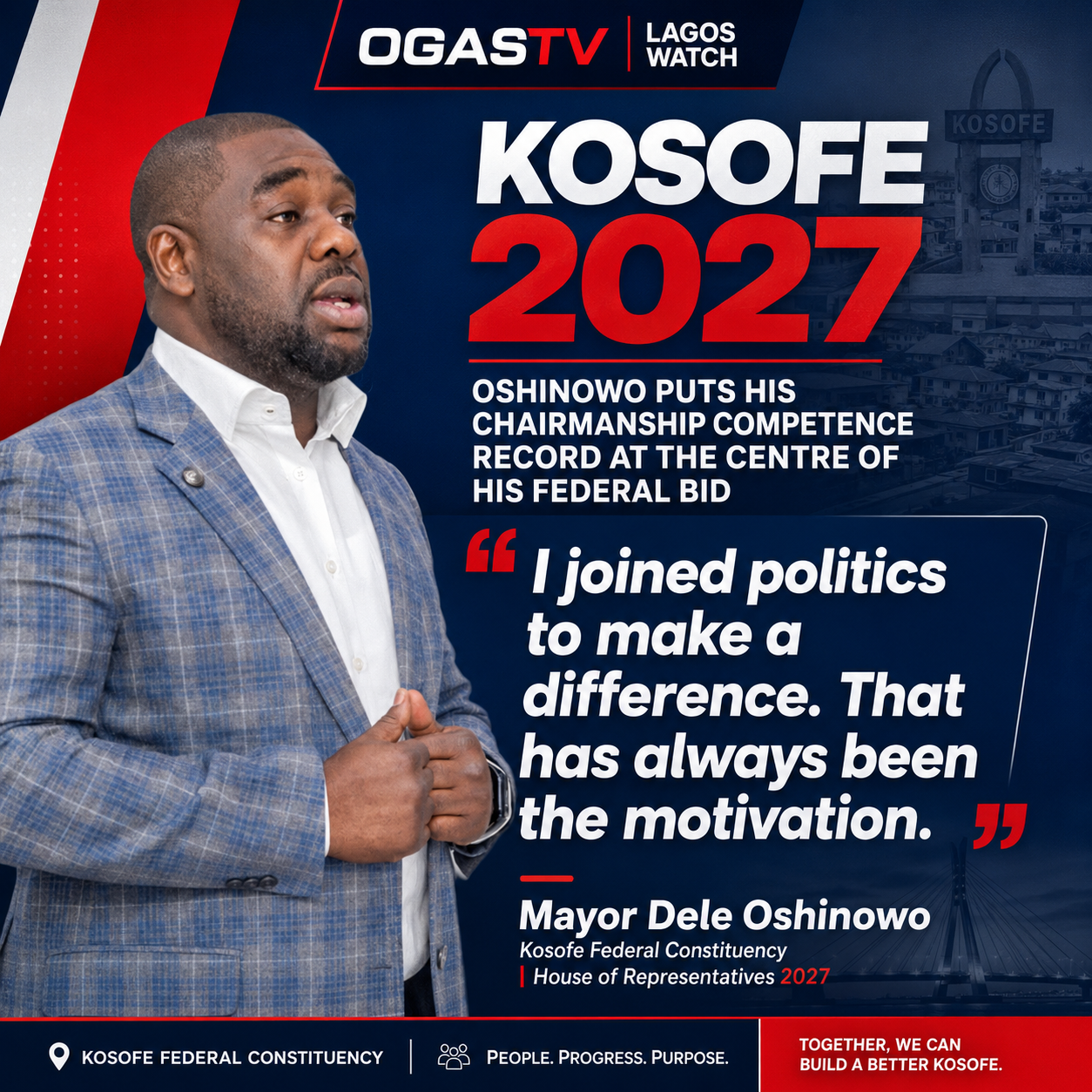
A detailed THISDAY profile published on August 16, 2026, gives the clearest recent indication of how Mayor Dele Oshinowo is beginning to frame his record and political case beyond Agboyi-Ketu. The article presents him as seeking the Kosofe House of Representatives seat and centres his argument on measurable infrastructure, internally generated revenue, housing partnerships, healthcare, youth skills development and local-government autonomy.
What changed: Mayor Dele Oshinowo’s public positioning is moving from grassroots mobilisation and campaign-structure building into a more developed “governance record” narrative. In the interview, he points to housing schemes, technology-enabled revenue collection, road construction, primary healthcare, vocational training and a new administrative complex as evidence of the model he wants associated with his leadership.
This now gives the Kosofe constituency grassroots stronger basis for evaluating the 2027 Kosofe contest on performance claims rather than slogans alone. Oshinowo is effectively presenting his Agboyi-Ketu tenure as his qualification for federal representation. That creates a testable question: How transferable is a local-government governance model to the House of Representatives?
OgasTv Africa verified: THISDAY published the interview/profile on August 16; Oshinowo said his administration used public-private housing partnerships, digital revenue mapping, vocational programmes and healthcare interventions; and the article reports multiple estates, road works, healthcare centres and a 90-room administrative complex as part of his record.
What remains unclear: The article does not provide documentary verification for the claimed 100% IGR growth, roughly 60 kilometres of roads, housing-unit totals, healthcare spending or beneficiary numbers.
A second development also merits monitoring reporting on August 16 in Kosofe says the installation of Oba Kabir Adesegun Saliu as Olu Oko Baba Agba has triggered fresh discussion about traditional boundaries and influence in the Kosofe-Oworonshoki axis, including attention to the absence of the Oloworo of Oworonshoki from the ceremony.