QUICK SUMMARY
On June 23, 2026, Nigeria’s 10th Senate read an Executive Bill to alter the 1999 Constitution and establish State Police Services across all 36 states. A 48-member Senate Committee reviewed the bill and recommended it be passed. If fully ratified, it will end Nigeria’s single centralised police structure and create a dual system — Federal Police for national matters, State Police for local law enforcement. But this is not yet law. State Houses of Assembly must still vote. OgasTv has read the document. Here is what it means for you.
What Happened — And What Is Actually Changing
Nigeria has operated a single, centralised police force since independence. The Nigeria Police Force, controlled from Abuja, is responsible for law enforcement across a country of over 220 million people spread across 36 states with vastly different security challenges. Critics have argued for decades that this model is structurally broken — too centralised, too slow, and too disconnected from local realities.
On June 23, 2026, the Federal Executive sent a Bill to the Senate to alter the 1999 Constitution. The Senate read it for the first and second time on the same day, debated it, and referred it to the 48-member Committee on the Review of the 1999 Constitution. That Committee, chaired by Deputy Senate President Jibrin Barau, reviewed it clause by clause and recommended it be passed without amendments.
Nigeria currently has ONE police force controlled from Abuja. This bill proposes creating 37 police services — one Federal Police (for national crimes) and one State Police in each of the 36 states (for local crimes). Both will exist side by side.
One Nigeria Police Force. Controlled federally from Abuja. Inspectors General appointed by the President. States have no independent police power. Officers deployed across states regardless of local knowledge.
Federal Police Service handles federal crimes, FCT, national security, and inter-state organised crime. State Police Services handle local law enforcement, public order, and community protection within each state.
Your Most Important Questions — Answered From The Bill
- 📋National minimum standards that all State Police Services must meet — so a Lagos State Police and a Zamfara State Police operate under the same constitutional floor
- ⚖️Judicial review — courts can be used to challenge how state police powers are exercised, protecting citizens from abuse
- 🏛️Time-bound federal intervention — the Federal Police can step into a state in defined emergency circumstances, but only for a limited period and under constitutional conditions
- 👥State Police Commissions — independent oversight bodies handling appointments, discipline and removal of state commanders, separate from the Governor’s direct authority
- 🔄Transitional preservation — Federal Police remain in every state until the State Police Service is fully functional, preventing security gaps during transition
How State Police Affects Ordinary Nigerians
For communities facing local threats:Bandits in Zamfara, kidnappers on Abuja highways, cult violence in Rivers, Fulani-farmer clashes in the Middle Belt — these are local problems that a centralised force deployed from Abuja has consistently failed to contain. State Police, with local knowledge and cultural competence, is the argument of supporters.
For Lagos residents specifically: Lagos State already funds an enormous amount of security infrastructure informally. A Lagos State Police would give the state direct authority to hire, train, and deploy officers calibrated to Lagos’ unique urban security challenges — from road safety to market security to waterfront communities like Oworoshoki.
For youth: State Police services would create thousands of new employment opportunities at the state level for young Nigerians who meet qualifications. Local recruitment means local economic investment.
For businesses and investors: Security is the number one conversation in every boardroom considering Nigeria. A more responsive, local policing model — if implemented well — directly improves the investment climate and reduces the private security costs that eat into every Nigerian business’s margins.
Arguments For
- Local knowledge improves crime response
- Faster deployment to community-level threats
- Aligns with true federalism
- Reduces overstretch of federal force
- Creates local employment for youth
- States can fund their own security priorities
Concerns Raised
- Risk of Governors using police against opponents
- Poorer states may underfund their police
- Could fragment national security coordination
- Ethnic or political bias in local recruitment
- Implementation timeline unclear
- State Assemblies may stall ratification
The Road to Law — Step by Step
The Federal Executive sent the constitutional amendment bill to the Senate on June 23, 2026.
✓ COMPLETED
The bill was read twice, debated, and referred to the 48-member Constitutional Review Committee chaired by DSP Jibrin Barau.
✓ COMPLETED
The committee reviewed the bill clause by clause and recommended it be passed as presented, with safeguards intact.
✓ COMPLETED
The full Senate must pass the bill at third reading. The Committee chairman has urged senators to support passage.
⏳ PENDING
The bill must also pass the House of Representatives as a constitutional amendment bill.
⏳ PENDING
At least 24 of Nigeria’s 36 State Houses of Assembly must approve the bill. This is where it could stall. Each state legislature must vote independently.
⏳ PENDING — MOST CRITICAL STAGE
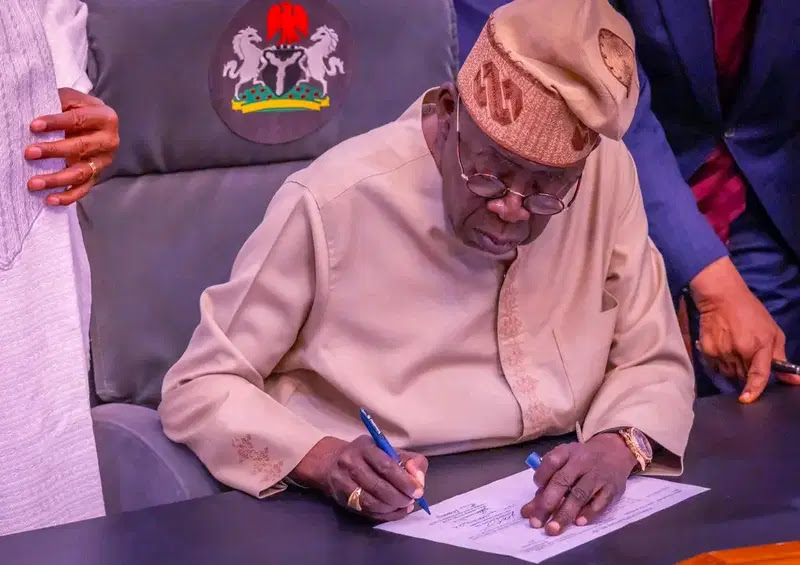
Once state assemblies ratify, the President signs. The Constitution is amended. Implementation begins.
⏳ PENDING
Nigeria has debated State Police for over two decades. The fact that a formal constitutional amendment bill has now been read in the Senate, reviewed by a 48-member committee, and recommended for passage is genuinely significant — this is the furthest this reform has progressed in Nigeria’s legislative history.
The safeguards in the bill — national minimum standards, judicial review, transitional provisions, and State Police Commissions — address the most common objections. Whether those safeguards are strong enough in practice will depend entirely on implementation, political will, and citizen vigilance.
The real test is at the State Houses of Assembly. Senators have been specifically urged to mobilise their state legislators. Citizens in every state should be asking their state assembly representatives: where do you stand on this bill, and why? That question is not just political — it is the exercise of democratic citizenship.
OgasTv’s position is not to advocate for or against State Police — reasonable Nigerians disagree, and both sides have legitimate points. Our position is that every Nigerian deserves to understand exactly what is in this bill, so that public debate is informed rather than driven by rumour.
How Civil Society Can Shape This Reform
This bill is not just a government matter. Nigerians have already shaped it — the Senate committee report notes that hundreds of memoranda were submitted by citizens and that public hearings were held across all six geopolitical zones. That civic participation must continue through the State Assembly ratification process.
Community and professional organisations — bar associations, market unions, youth groups, women’s organisations, and civil society groups — should be submitting formal positions to their State Houses of Assembly. That is how constitutional reform gets shaped in a democracy.
Accountability organisations must also plan for the implementation phase. The bill passing is just the beginning. How state police commissions are constituted, who sits on them, and how complaints against state police are handled will determine whether this reform protects citizens or endangers them.
What You Can Do Right Now
- Find out who your State House of Assembly representative is — they will vote on this bill when it arrives in your state
- Contact your state assembly member and ask: do you support the State Police Bill, and what safeguards will you push for in your state’s implementation?
- Share this explainer with your family, colleagues, and community groups — informed debate is how democracies make better decisions
- Follow your State House of Assembly proceedings — most states publish their order papers and votes publicly
- If your civil society organisation has a position on State Police, submit a formal memorandum to your State House of Assembly’s constitutional review committee
- Watch for how State Police Commissions are constituted in your state — who sits on those bodies will determine everything
- Demand transparency on budgets: a State Police Service is only as good as its funding — hold your state government accountable for adequate allocation
Do you trust your State Government enough to give them their own police force and what safeguards would make you feel protected?
Drop your answer in the comments. OgasTv Nigeria reads every response. Your voice shapes our next coverage.
This article is based directly on the official Senate Committee Report dated June 2026, signed by DSP/Chairman Senator Jibrin Barau and Committee Clerk Dr. Innocent Mebiri. OgasTv has reviewed the full document. All provisions cited are drawn from the primary source — not secondhand reporting.
- The 10th Senate, Federal Republic of Nigeria — “Report of the Senate Committee on the Review of the 1999 Constitution on A Bill to Provide for the Establishment of State Police” — June 2026 (Primary Source Document)
- Constitution of the Federal Republic of Nigeria, 1999 (as amended) — Fourth Schedule: Functions of Local Government Councils
- Nigeria Police Force Act — existing legislative framework for national policing
- Senate Committee Membership: 48 senators chaired by DSP Senator Jibrin Barau; Clerk: Dr. Innocent Mebiri
- Senate Plenary — First and Second Reading of the Bill: Tuesday, June 23, 2026