The ₦68 Billion Question:
OGASTV NIGERIA | Policy Explained
⸻
QUICK SUMMARY
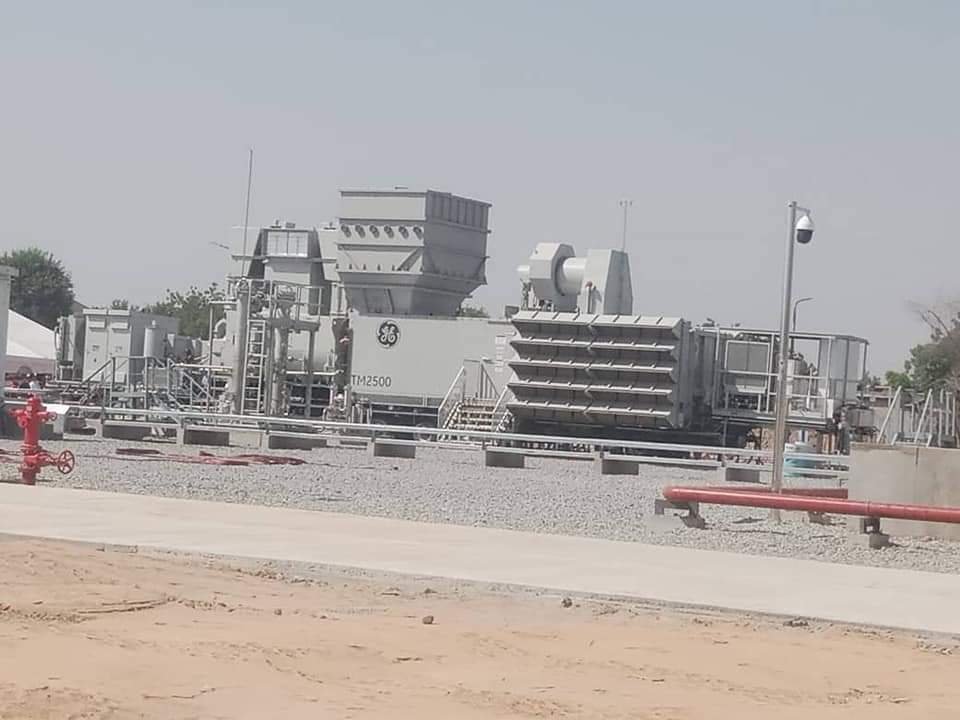
In April 2026, Borno State’s Governor Babagana Zulum and Senator Ali Ndume publicly thanked President Bola Tinubu for approving ₦68 billion in operating-cost funding for the Maiduguri Emergency Power Plant (MEPP) — money to be released in phases from March 2026 to December 2028. It’s worth being precise about what this is: not the delivery of a new power plant, but a federal government intervention to keep an existing, years-old plant running. Understood accurately, it’s still a meaningful decision — and it opens a genuine conversation about what a fuller, long-term infrastructure vision for Nigeria could look like.
⸻
WHAT HAPPENED
The Maiduguri Emergency Power Plant was originally commissioned in 2021 and upgraded to 50 megawatts of capacity in December 2023 — both under earlier federal interventions through the Nigerian National Petroleum Company Limited (NNPCL), in a region where insurgent attacks have repeatedly damaged power infrastructure. By 2026, the plant faced an operating funding gap. President Tinubu approved ₦2 billion in monthly OPEX (operating expenditure) support, running from March 2026 through December 2028, totaling ₦68 billion, to keep the plant running and bridge that gap.
Governor Zulum publicly thanked the president, saying the intervention “has not only revived economic activities but has also significantly improved livelihoods and strengthened efforts to address security challenges” in Borno State. Former Senate Leader Ali Ndume echoed the praise, calling the funding “a lifeline” for small and medium enterprises in a state still recovering from over a decade of insurgency.
It’s also worth reporting the fuller picture honestly, in the spirit of accurate accountability journalism: in the same reporting period, a separate gas-to-power plant in Bayelsa State — commissioned by President Tinubu in April 2026 as part of the same broader push for gas-powered electricity — was reported by investigative outlet FIJ to have never actually been turned on since its commissioning. Two different projects, two very different outcomes: one plant kept running through sustained funding, another commissioned publicly but reportedly not yet delivering power. Both are part of the same national push to expand gas-powered electricity, and both deserve to be tracked, not just the successful one.
⸻
WHY DID IT HAPPEN
Borno State’s power infrastructure has been a direct casualty of over a decade of insurgency — attacks on transmission infrastructure are a recurring, specific problem the MEPP was built to work around using localised gas generation rather than relying solely on the national grid. The 2026 OPEX funding gap reportedly emerged because operating a gas power plant has ongoing costs — fuel supply, maintenance, staffing — that don’t disappear once a plant is built and commissioned; without dedicated operating funds, even a working power plant can be forced to reduce output or shut down.
⸻
WHY SHOULD CITIZENS CARE
The distinction between “building a power plant” and “funding a power plant’s operating costs for three years” matters enormously for how citizens judge government performance. A newly built plant is visible and easy to praise; ongoing operating funding is less visible but arguably just as critical — a plant that exists but can’t afford fuel or maintenance delivers no power at all. Citizens should learn to ask both questions about any infrastructure announcement: was it built, and is it actually running?
⸻
WHAT CAN GOVERNMENT DO
• Publish plant-level, monthly power output data for MEPP and similar federally funded projects, so citizens — not just governors and senators — can verify that approved OPEX funding is translating into actual electricity delivered.
• Investigate and publicly account for the reported non-operational status of the Bayelsa gas plant, applying the same transparency standard to underperforming projects as to successful ones.
• Build a public, searchable national infrastructure tracker covering every commissioned project under the Renewed Hope Agenda — status, funding released, output achieved — so “commissioned” doesn’t become a word that obscures whether something actually works.
• Extend the long-term OPEX funding model used for MEPP to other insurgency-affected infrastructure, since sustained operating funding, not just capital construction, may be the more durable fix for regions where infrastructure is a repeated target of attack.
⸻
WHAT CAN CITIZENS DO
• Ask specifically about output, not just commissioning. When a project is announced, the useful question is “how many megawatts is it actually delivering today?” — not just “has it been commissioned?”
• Support local watchdog and civic journalism that tracks project delivery over time, since a single commissioning ceremony is a moment, but real accountability requires tracking outcomes for months or years afterward.
• Distinguish between praise from elected officials and independent verification. A governor or senator thanking the president is a political relationship, not proof a project is working as intended — both things can be true at once.
⸻
OGASTV OBSERVATION: THE LONG-TERM VISION THIS RAISES.
Verified funding decisions like the MEPP OPEX approval are useful building blocks, but they raise a bigger question worth asking honestly: what should Nigeria’s infrastructure vision actually look like over the next twenty years, not just project by project?
OgasTv’s own view — offered here as editorial recommendation, not as government policy — is this: power and road infrastructure should not be treated as isolated projects, but as connected systems. A power plant matters more when it sits along a transport corridor that lets local businesses actually move goods to market. A new road matters more when it opens land for local families and young entrepreneurs to build on, not just for large investors to buy up first.
Building on that logic, we’d propose three concrete ideas for any government or state actually pursuing that kind of integrated, long-term infrastructure vision:
• Require investors and foreign workers on major infrastructure projects to learn the basics of the indigenous language of the community they’re working in. This is not a legal requirement anywhere in Nigeria today — it is OgasTv’s recommendation for how genuine, lasting unity between investors and host communities could be built, rather than assumed. Language is often the first and most visible signal of whether an investor sees a community as a partner or simply a site.
• Reserve low-cost land along new road corridors specifically for youth development and first-time local investors, before land prices rise on the back of the same infrastructure spending — a way to ensure local young people benefit from the corridor’s growth rather than being priced out of it by outside capital before they can participate.
• Designate low-tax zones along these corridors for local businesses and start-ups, giving communities a real, structural incentive to build local enterprises alongside the new infrastructure, not just watch outside investors capture most of the value.
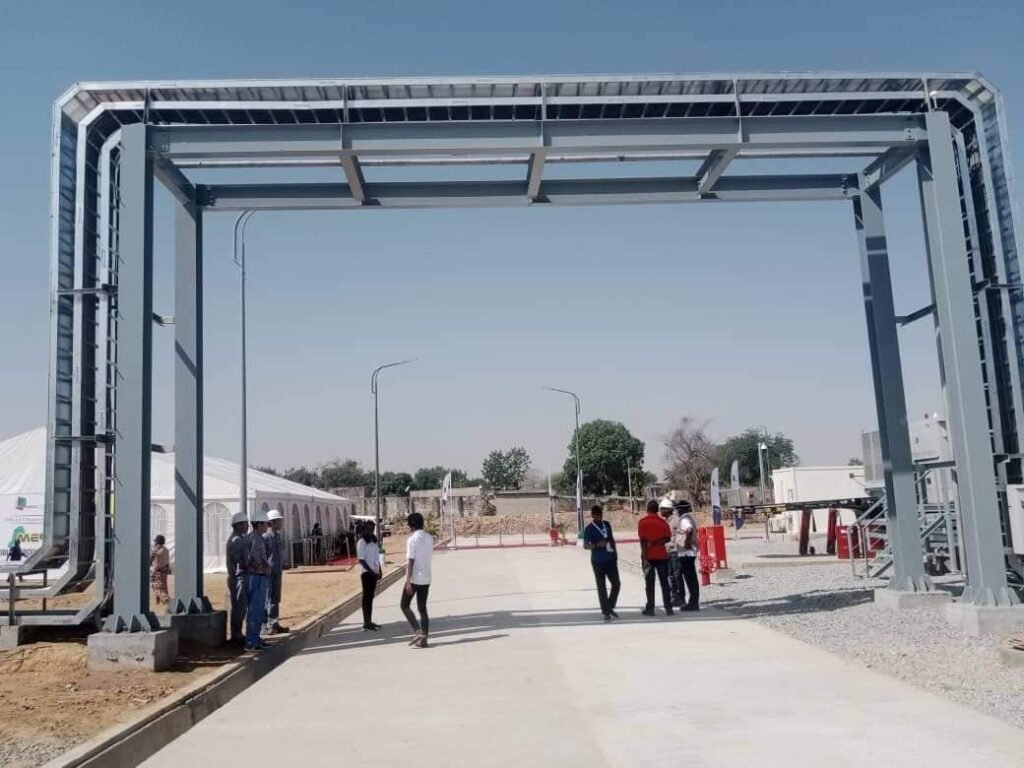
None of these three ideas are currently government policy anywhere we’ve verified — they are offered here as OgasTv’s own long-term vision for what community-inclusive infrastructure development could look like, and as a standard by which future government infrastructure announcements can be measured.
⸻
WHAT LEADERSHIP LESSON CAN AFRICA LEARN
Real infrastructure leadership isn’t measured at the ribbon-cutting. It’s measured months and years later, in whether the plant is still running, whether the road still connects the communities it promised to connect, and whether the people who lived there before the project arrived are meaningfully better off — not just the investors who arrived after. Praise at a commissioning ceremony is easy to secure.
Delivery, sustained over years, is the harder and more important thing to build — and the only thing citizens should ultimately judge leaders by.