
 |
| Ogas Tv Africa |
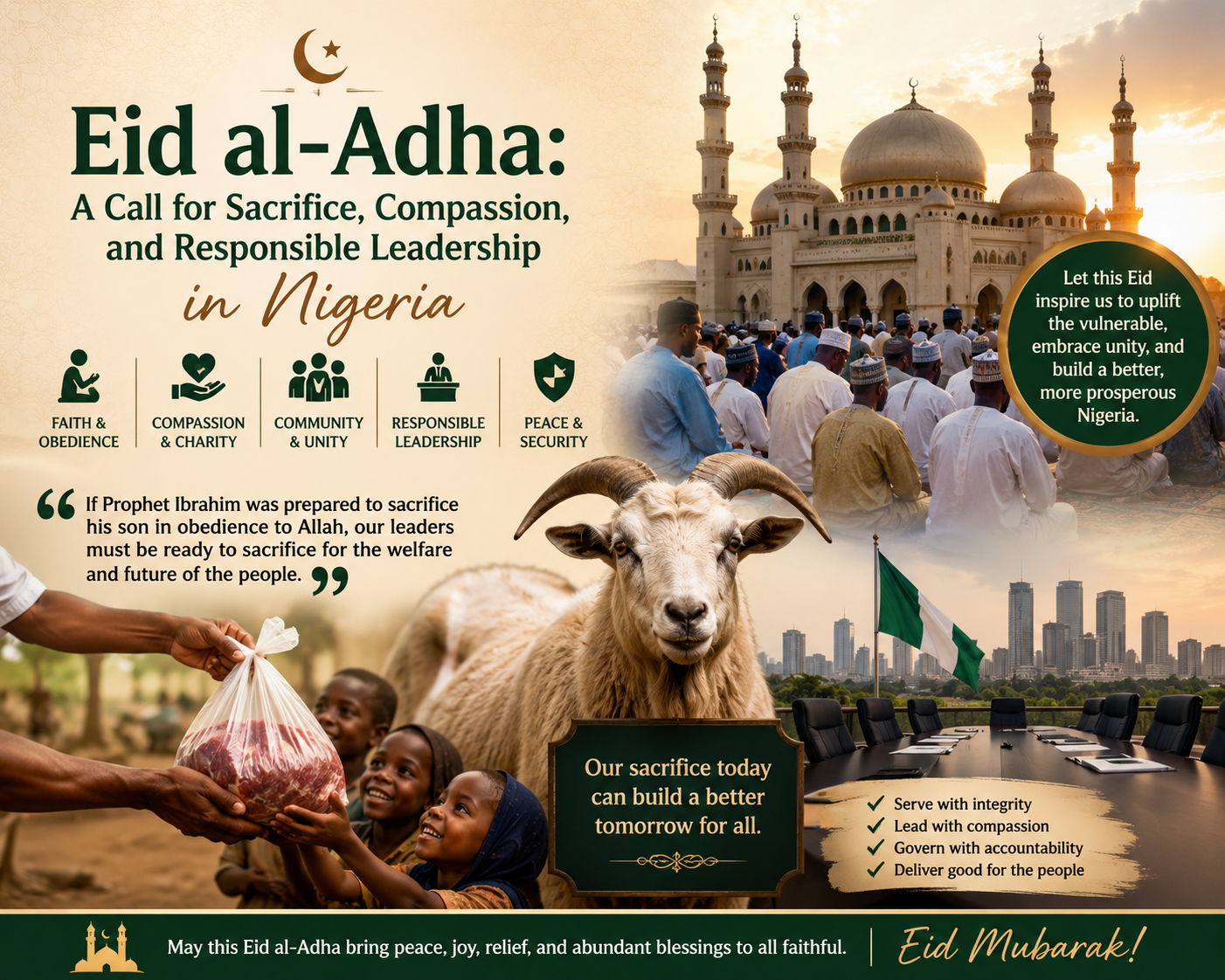
As Muslims across Nigeria join the global Muslim Ummah in celebrating the sacred festival of Eid al-Adha, the occasion once again reminds humanity of the timeless virtues of faith, sacrifice, humility, and obedience to Allah.
Rooted in the profound story of Prophet Ibrahim’s unwavering willingness to obey God’s command, Eid al-Adha — widely known as the Festival of Sacrifice — is far more than an annual religious celebration. It is a deeply spiritual tradition marked by congregational prayers, the symbolic slaughtering of livestock, and acts of charity through the sharing of meat with families, neighbors, and the less privileged.
At its core, the festival emphasizes compassion, empathy, and community solidarity.
However, beyond the celebrations and festivities, this year’s Eid arrives at a difficult and defining moment for millions of Nigerians facing severe economic hardship and growing insecurity.
The True Meaning of Sacrifice
The lessons of Eid al-Adha carry a powerful message not only for individuals but also for those entrusted with leadership. If Prophet Ibrahim demonstrated complete submission and sacrifice in obedience to Allah, then political leaders must also show genuine commitment to serving the people with sincerity, accountability, and selflessness.
Governance, in its highest form, is an act of sacrifice and service to humanity. Unfortunately, many Nigerians continue to experience a widening gap between public expectations and the realities of leadership.
This year’s Eid celebration comes amid rising inflation, economic uncertainty, and increasing costs of living. Global economic pressures, supply chain disruptions, soaring transportation costs, and the domestic impacts of fuel subsidy removal and currency reforms have significantly worsened the financial burden on ordinary citizens.
Food prices and livestock costs have risen sharply, making this one of the most financially difficult festive seasons in recent memory. For countless middle-class and vulnerable households, the traditional sacrificial ram has become increasingly unaffordable.
A Time to Remember the Vulnerable
In light of these harsh realities, the spirit of Eid al-Adha should inspire compassion and support for the less privileged.
There is growing concern over the visible suffering faced daily by millions of Nigerians, while public events and official celebrations are still sometimes characterized by extravagance rather than fiscal discipline and empathy.
Eid teaches moderation, kindness, and collective responsibility. It is a reminder that society thrives best when people support one another regardless of ethnic, political, or religious differences.
Nigerians are encouraged to embrace peace, tolerance, and unity during this sacred period while reflecting on how individual actions can contribute to national renewal and social harmony.
Security Concerns Remain a Major Challenge
Despite the spiritual significance of the season, the persistent wave of insecurity across the country continues to cast a shadow over celebrations.
Terrorism, banditry, kidnapping, and violent attacks remain major concerns affecting communities nationwide. Citizens continue to call on governments at all levels to intensify efforts toward dismantling criminal networks and restoring safety and stability across the country.
For many families, true celebration can only exist where peace and security are guaranteed.
A Prayer for Peace and Relief
As Muslims mark this important religious festival, the occasion serves as a moment for reflection, sacrifice, compassion, and renewed hope for a better Nigeria.
May this Eid al-Adha bring peace, joy, relief, and abundant blessings to all faithful. May the season strengthen the values of unity, generosity, and responsible leadership across the nation.
Eid Mubarak to all Muslim faithful.