
 |
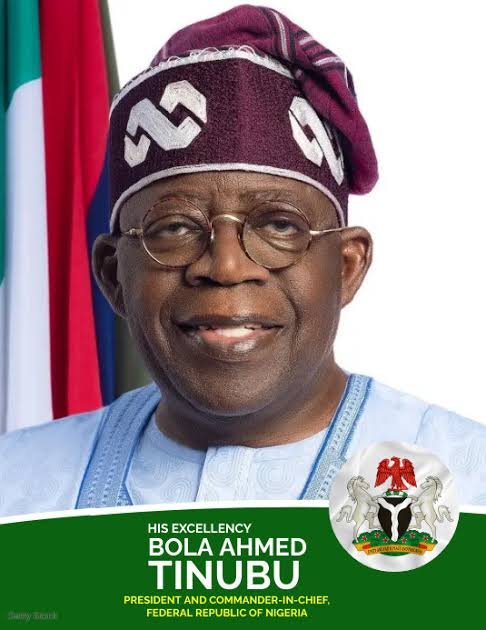
| Bola Ahmed Tinubu |
As President Bola Ahmed Tinubu marks his third year in office, Nigeria finds itself at a critical crossroads. His administration has pursued some of the most ambitious reforms in recent history, earning praise from supporters who view him as a bold reformer willing to confront long-standing structural challenges. At the same time, critics argue that these reforms have been accompanied by growing concerns about political interference and the weakening of democratic institutions.
A Reform Agenda Defined by Local Government Autonomy
One of the Tinubu administration’s most significant achievements has been the push for local government autonomy. In a landmark ruling, the Supreme Court granted full financial and administrative independence to Nigeria’s 774 local government areas, ending decades of state government dominance over council finances.
For years, governors managed local government funds through the joint allocation system, a practice many believed hindered grassroots development and accountability. The Supreme Court’s decision was widely celebrated as a major step toward strengthening governance at the local level.
Supporters of the administration hailed the ruling as a historic victory for democracy and grassroots development. However, nearly a year later, questions remain about the effectiveness of its implementation.
Critics contend that the Federal Government has not done enough to ensure compliance among state governors, some of whom are accused of maintaining indirect control over local government finances despite the court’s decision.
The Osun State Flashpoint
The challenge of implementing local government autonomy is perhaps most evident in Osun State.
Since March 2025, statutory allocations meant for the state’s 30 local government areas have been withheld due to a dispute over the legitimacy of council leadership following the February 2025 local government elections.
The Federal Government directed funds to previously elected APC chairmen, a move strongly opposed by Governor Ademola Adeleke’s administration. The state government subsequently challenged the decision in court.
In December 2025, the Supreme Court dismissed the suit filed by the Osun State Government, ruling that the state’s Attorney General lacked the legal standing to sue on behalf of the local councils.
However, the court also maintained that the Federal Government’s decision to withhold local government funds violated constitutional provisions and earlier judgments affirming local government autonomy.
Despite the ruling, the allocations remain frozen, fueling criticism from civil society organizations and governance advocates who have called for immediate compliance with the court’s judgment.
Growing Allegations of Pressure on the Opposition
Beyond governance reforms, the Tinubu administration has faced persistent allegations of political interference in opposition parties.
Observers argue that the ruling All Progressives Congress (APC) has increasingly focused on weakening rival political platforms ahead of the 2027 general elections. Opposition parties such as the Peoples Democratic Party (PDP) and the African Democratic Congress (ADC) have repeatedly accused the Federal Government of influencing internal party affairs.
The controversy intensified when Oyo State Governor Seyi Makinde claimed that he witnessed a conversation involving President Tinubu and Federal Capital Territory Minister Nyesom Wike.
According to Makinde, Wike allegedly told the president that he would “hold PDP” for him ahead of the 2027 elections. The governor said the statement left him shocked.
Wike, however, quickly denied the allegation, describing it as “a blatant lie.”
Nevertheless, Wike’s political actions—including his support for APC candidates while remaining a member of the PDP—have continued to generate debate about divisions within opposition politics.
Gbajabiamila’s Remark Sparks Debate
Another controversy emerged in April 2026 when President Tinubu’s Chief of Staff, Femi Gbajabiamila, reportedly advised ADC lawmaker Leke Abejide to remain within his party and challenge opposing factions.
According to reports, Gbajabiamila told the lawmaker: “Stay in ADC. Fight them. Scatter them.”
Critics interpreted the comment as evidence of official encouragement of internal conflicts within opposition parties. Supporters, however, argued that the remark was taken out of context and did not necessarily indicate government interference.
Regardless of interpretation, the statement added to growing concerns about the state of opposition politics in Nigeria.
Leadership Crises Across Opposition Parties
Several opposition parties have recently experienced leadership disputes and factional crises.
The PDP, Labour Party, ADC, and more recently the Social Democratic Party (SDP), have all been embroiled in internal conflicts, often despite court interventions aimed at resolving them.
Just last week, a faction within the SDP reportedly announced the expulsion of the party’s already-endorsed presidential candidate, Adewole Adebayo, further highlighting the instability affecting opposition platforms.
Political analysts argue that these recurring crises raise important questions about the health of Nigeria’s multiparty democracy and the ability of opposition parties to provide effective alternatives ahead of the next election cycle.
Three Years On: Progress and Persistent Questions
As President Tinubu enters the second half of his first term, his administration’s record remains a subject of intense debate.
On one hand, reforms such as local government autonomy have the potential to reshape governance and improve accountability at the grassroots level. On the other, unresolved implementation challenges and allegations of political interference continue to cast a shadow over these achievements.
The coming years will likely determine whether the administration’s legacy is defined primarily by institutional reforms or by concerns over the strength and independence of Nigeria’s democratic processes.
For many Nigerians, the central question remains: can meaningful reforms coexist with a vibrant and competitive democracy, or will political controversies overshadow the administration’s accomplishments?