 |
| Ogas Tv Africa |
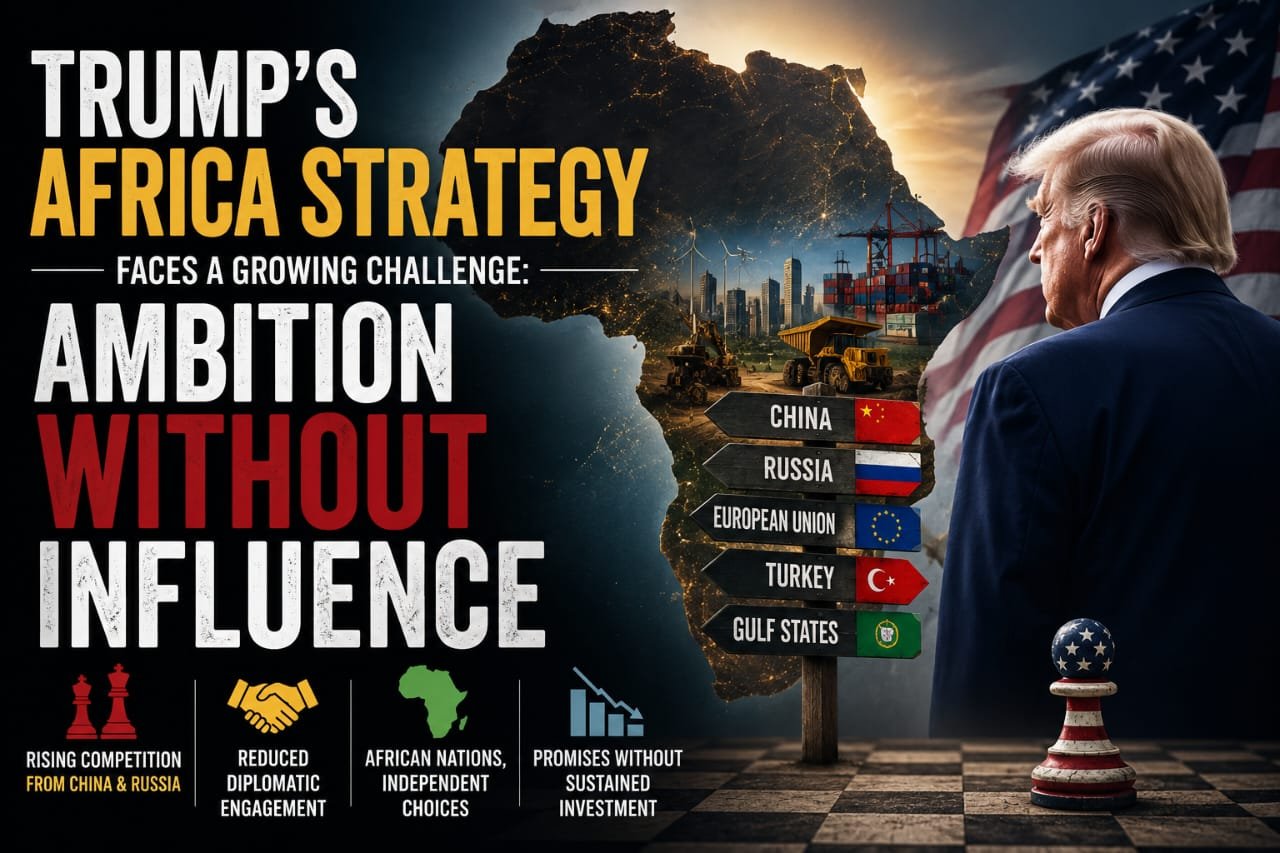
The White House’s Africa strategy under President Donald Trump’s second term is facing a fundamental contradiction. While Washington seeks a more transactional relationship with African nations—focused on trade, investment, and access to critical minerals—it has simultaneously weakened many of the diplomatic tools that historically gave the United States influence across the continent.
Recent developments, however, suggest that some policymakers are beginning to recognize this disconnect. Frank Garcia was recently sworn in as Assistant Secretary of State for African Affairs after the position remained vacant for several months. At the same time, lawmakers have introduced legislation aimed at expanding the State Department’s expertise on African affairs. These moves reflect an important realization: a strategy centered on deals and partnerships requires stronger diplomatic engagement, not less.
A Shift Away from Traditional Engagement
Upon returning to office, the Trump administration signaled its intention to move beyond what it viewed as aid dependency. One of its most notable actions was the dismantling of USAID, accompanied by a broader shift toward commercial diplomacy and strategic interests.
The rationale behind this approach is understandable. Prioritizing trade, investment, and economic partnerships aligns with a vision of Africa as a strategic partner rather than a recipient of assistance. However, the administration appears to have underestimated the extent to which American influence has traditionally depended on relationships that extend beyond business transactions.
For decades, the United States offered African governments a comprehensive partnership package that included development aid, security cooperation, educational exchanges, and sustained diplomatic engagement. While African leaders did not always agree with Washington’s policies, they often accepted American influence because the relationship delivered benefits across multiple sectors.
Today, that broader framework has been narrowed, yet the expectation of maintaining the same level of leverage remains.
Signs of Resistance Across the Continent
The consequences of this policy shift are becoming increasingly evident. Efforts by Washington to secure cooperation on critical minerals and other strategic priorities have encountered growing resistance.
African governments are showing greater reluctance to enter into arrangements perceived as one-sided. Public sentiment is also becoming more vocal. In Kenya, for example, citizens have protested plans related to a proposed U.S.-backed Ebola center, highlighting broader concerns about external influence and national priorities.
Such reactions reflect a changing geopolitical landscape in which African nations possess more choices and greater bargaining power than in previous decades.
Visa Restrictions and Perception Problems
The United States has also faced criticism over policies affecting Africans directly. Expanded visa restrictions and reductions in visa-processing services across the continent have fueled concerns about accessibility and inclusion.
Additionally, efforts to relocate deported migrants to African countries have reinforced perceptions that Washington increasingly views the continent through the lenses of migration control and resource extraction.
These issues go beyond public relations. Historically, one of America’s greatest strengths has been the opportunities it provided through higher education, professional exchanges, business networks, and legal pathways for travel. Restricting access to these opportunities risks weakening a key source of influence that many competitors have struggled to replicate.
Why Transactional Diplomacy Requires More Expertise
Ironically, a transactional foreign policy may require more diplomatic expertise than the aid-based model it seeks to replace.
Negotiating complex agreements involving minerals, technology, infrastructure, and security demands officials with deep knowledge of local politics, strong relationships with regional stakeholders, and a clear understanding of where compromise is possible.
This reality underscores the significance of Frank Garcia’s appointment and the broader effort to strengthen Africa-focused expertise within the State Department. Effective commercial diplomacy cannot succeed without the institutional knowledge and diplomatic networks needed to support it.
Africa’s Expanding Global Options
The administration is correct in asserting that Africa should be viewed as a strategic partner rather than solely through the lens of aid. However, the continent is operating in an increasingly competitive global environment.
Alongside China, countries such as the United Arab Emirates, Saudi Arabia, and Türkiye have significantly expanded their engagement with African states through investment, infrastructure projects, trade partnerships, and long-term diplomatic relationships.
In this environment, influence increasingly belongs to those willing to invest in enduring partnerships rather than short-term transactions.
Looking Ahead
The likely outcome of the current approach is not a complete withdrawal of U.S. influence from Africa. Instead, experts warn of a gradual erosion of Washington’s position as competitors strengthen their presence through sustained engagement and relationship-building.
If the United States hopes to remain a leading partner on the continent, it may need to balance its focus on trade and strategic interests with renewed investments in diplomacy, people-to-people connections, and long-term partnerships. In Africa’s evolving geopolitical landscape, influence is built not only through deals, but through trust, consistency, and commitment.